Power Systems, Reactors, And Synchronism
Visual topic gallery
Power Systems, Reactors, And Synchronism
Visual routes through system sections, reactors, synchronizing current, power-limiting reactance, apparatus, and industrial engineering decisions.
modern guide diagrams
reconstructions, not historical evidencefigure candidates
OCR/PDF-text leads needing crop reviewformula candidates
math leads needing transcription reviewsource routes
source text, workbench, visual and formula mapsLayer rule: original crops, figure candidates, modern redraws, and formula candidates are separated. Use this page to browse visually, then verify in the linked source text and workbench.
Source Routes
Section titled “Source Routes”Modern Guide Diagrams
Section titled “Modern Guide Diagrams”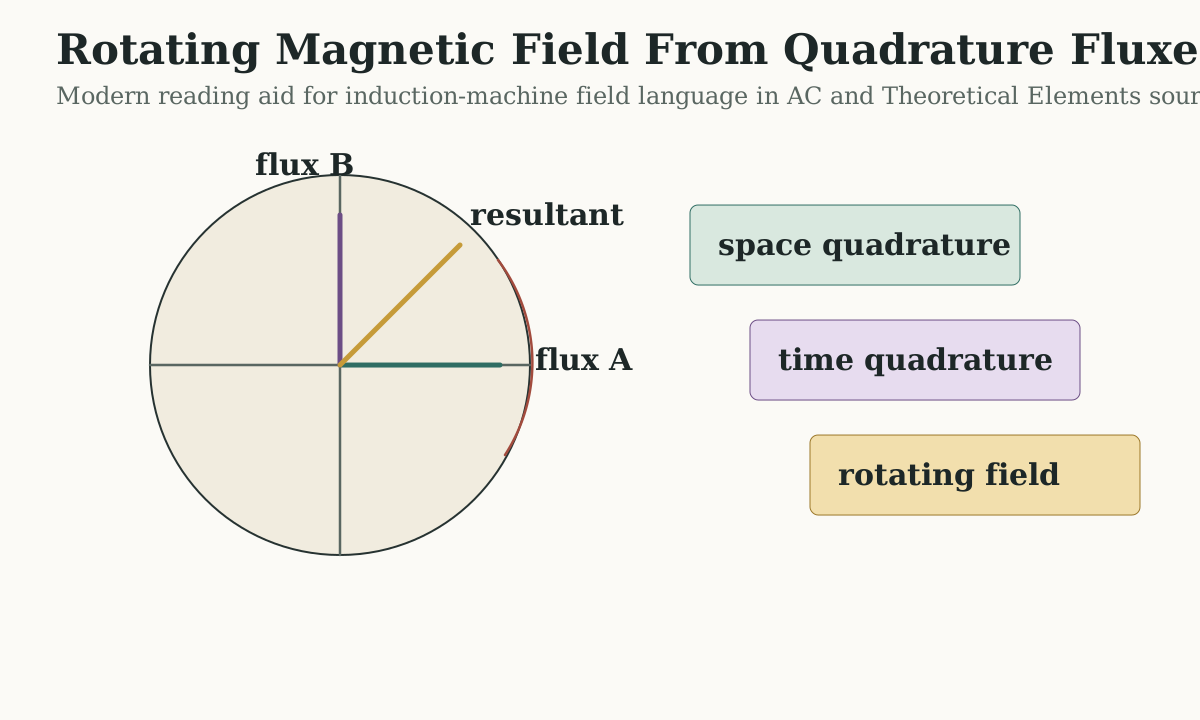
Modern reading aid for induction-machine field language in AC and Theoretical Elements sources.
symbolic-method, magnetism, phase, induction-motor
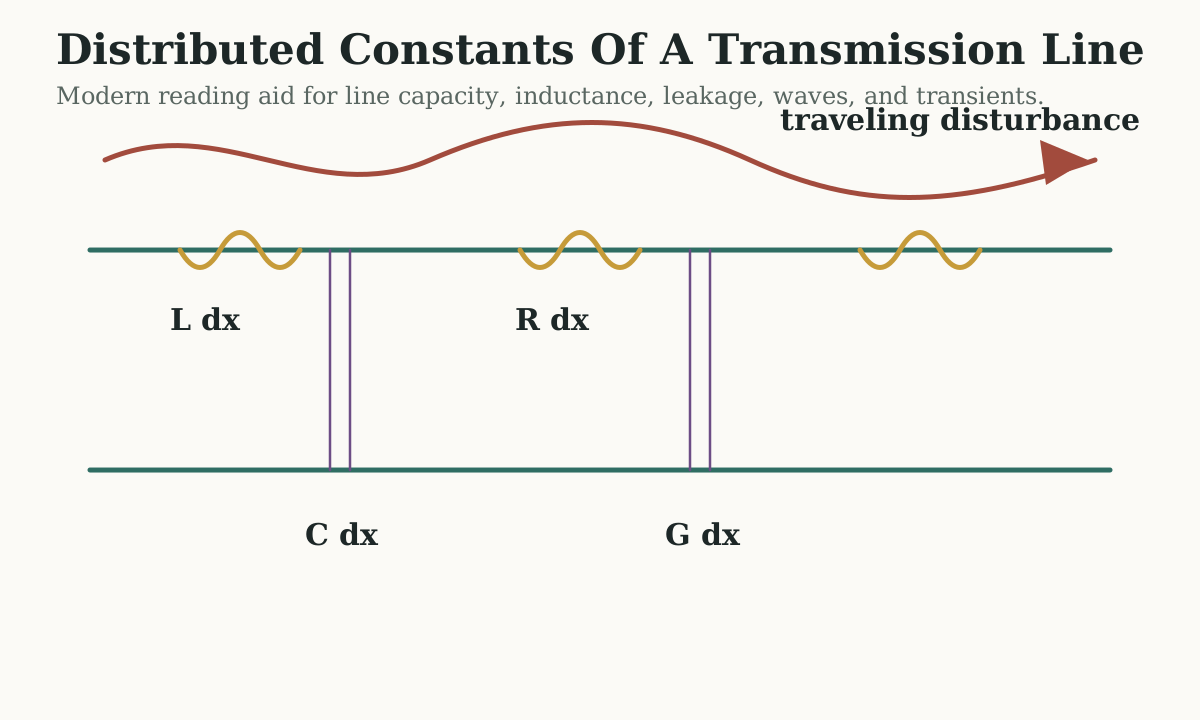
Modern reading aid for line capacity, inductance, leakage, waves, and transients.
distributed-constants, capacity, inductance, waves
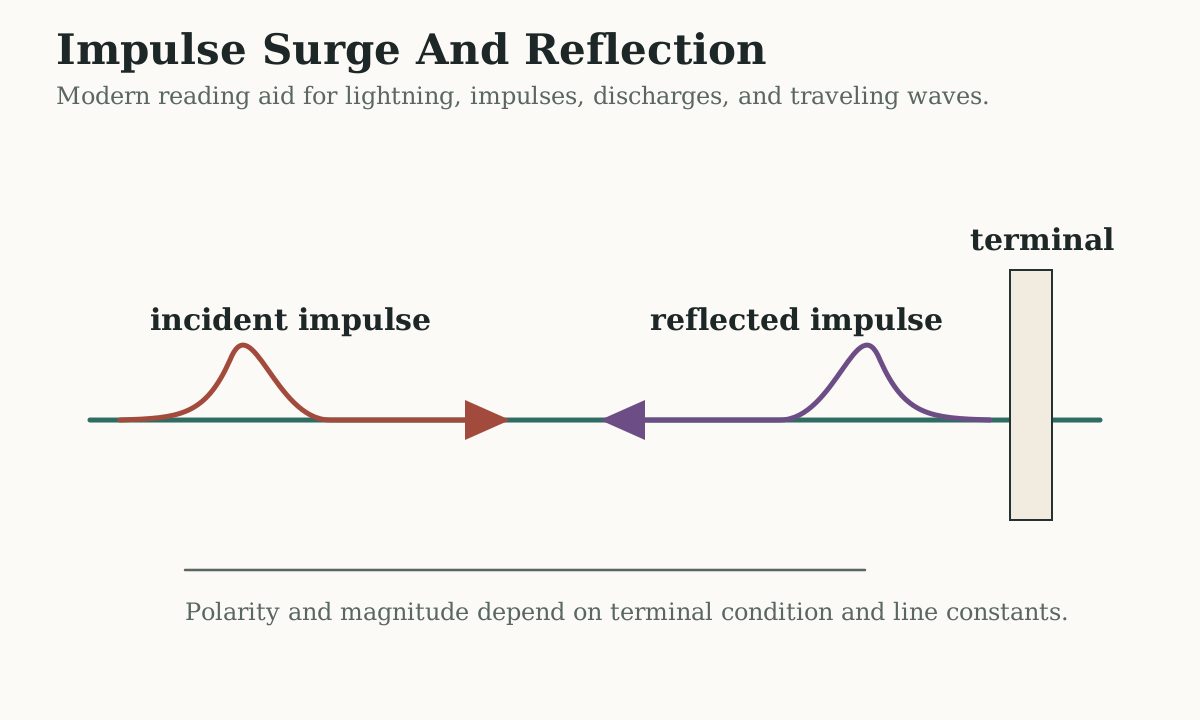
Modern reading aid for lightning, impulses, discharges, and traveling waves.
lightning-surges, impulse-current, traveling-wave
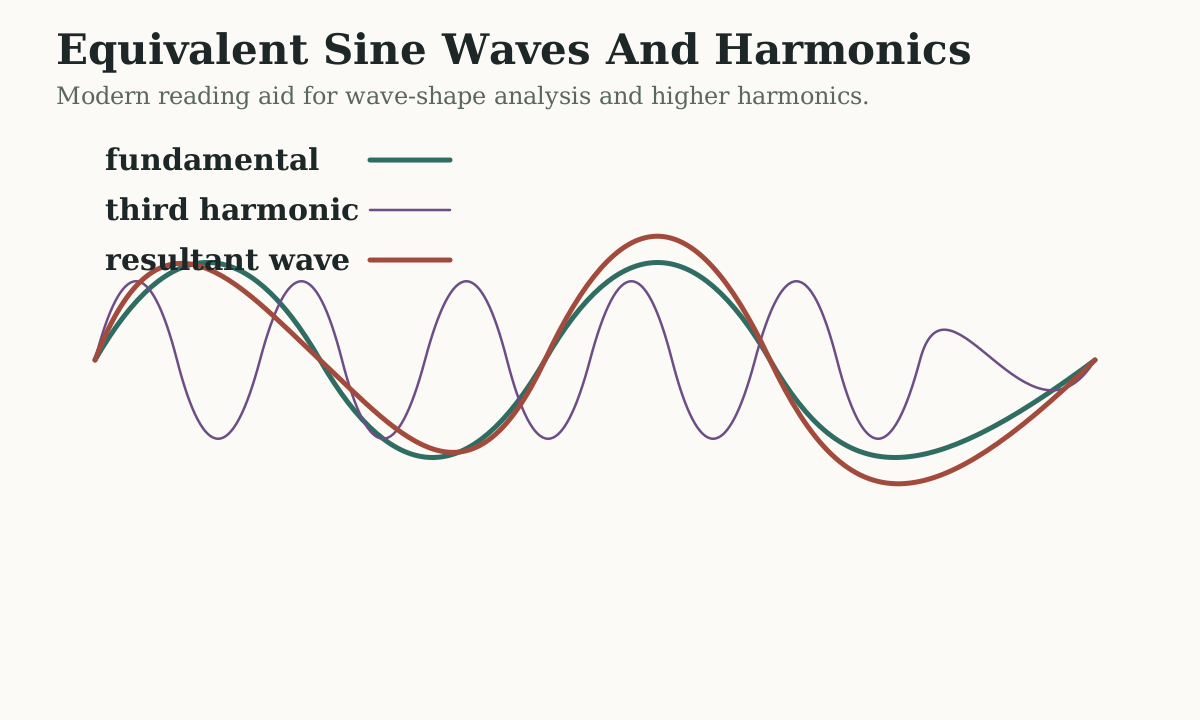
Modern reading aid for wave-shape analysis and higher harmonics.
harmonics, wave-shape, fourier-analysis
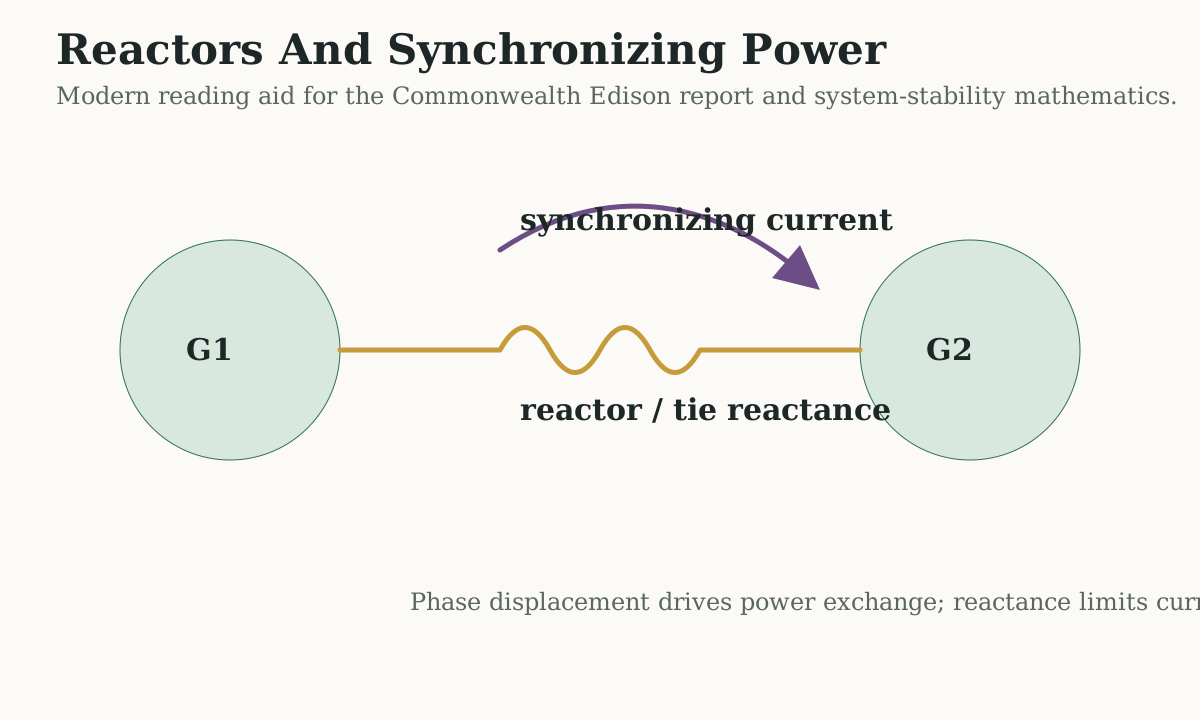
Modern reading aid for the Commonwealth Edison report and system-stability mathematics.
synchronizing-power, power-limiting-reactors, reactance
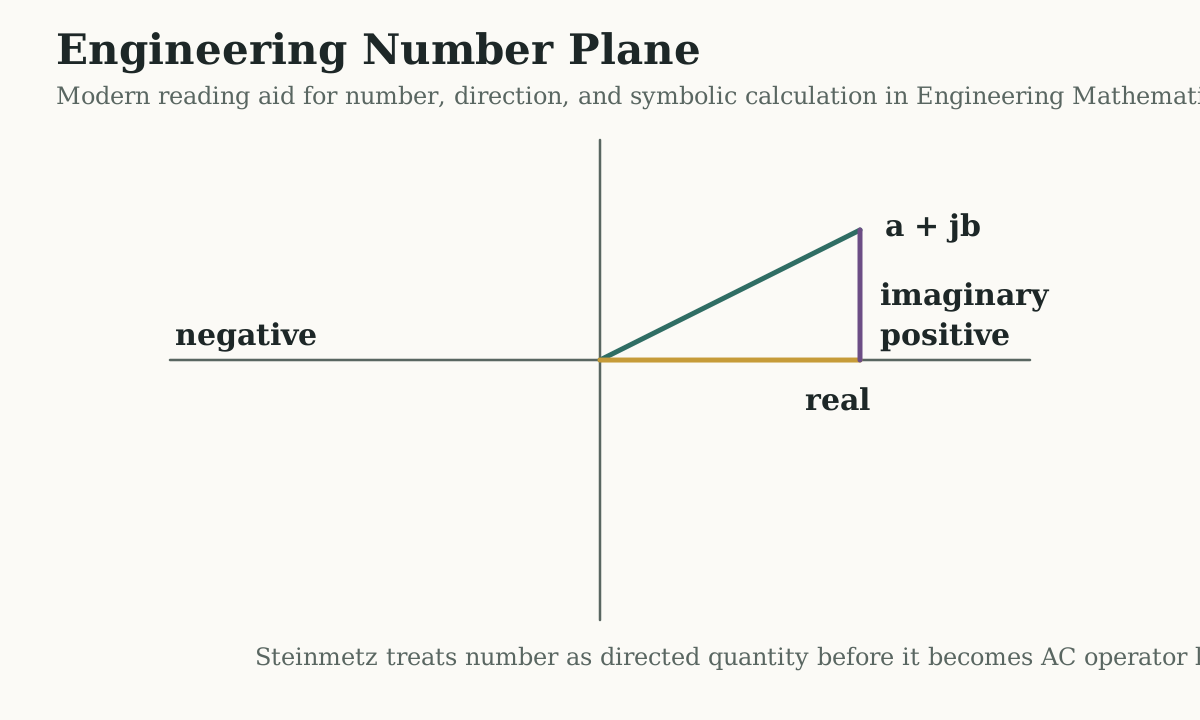
Modern reading aid for number, direction, and symbolic calculation in Engineering Mathematics.
complex-quantities, number, symbolic-method
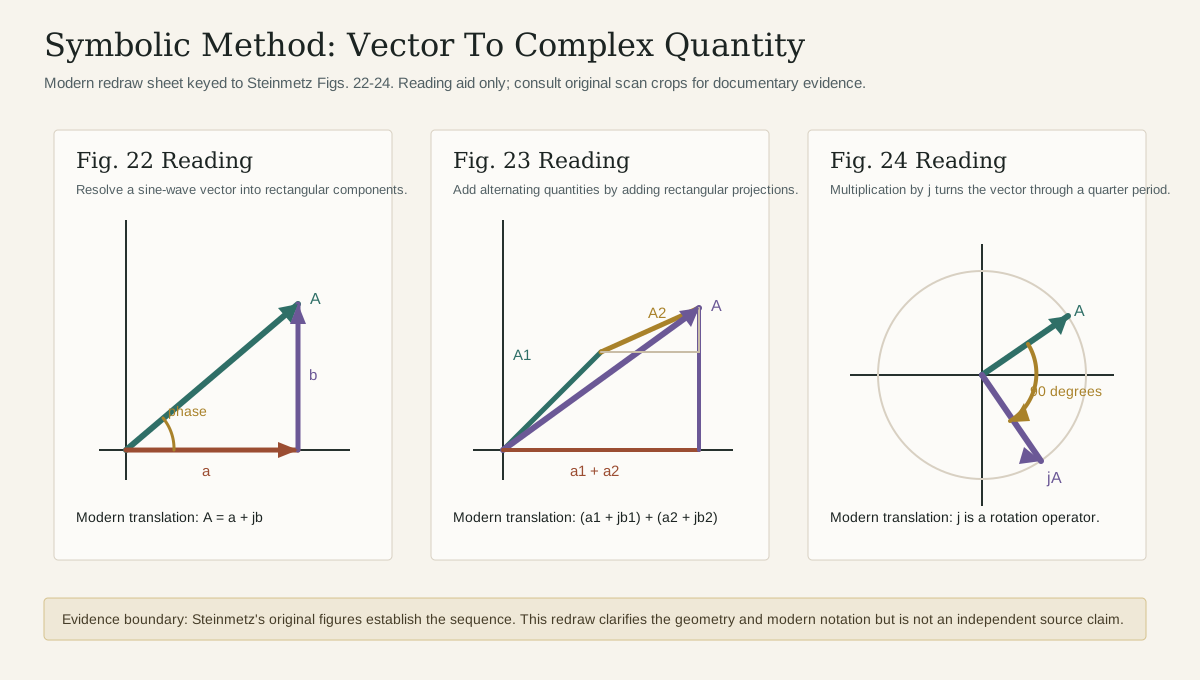
Modern redraw sheet for rectangular components, resultant addition, and quarter-period j rotation.
symbolic-method, complex-quantities, phasor, operator-j
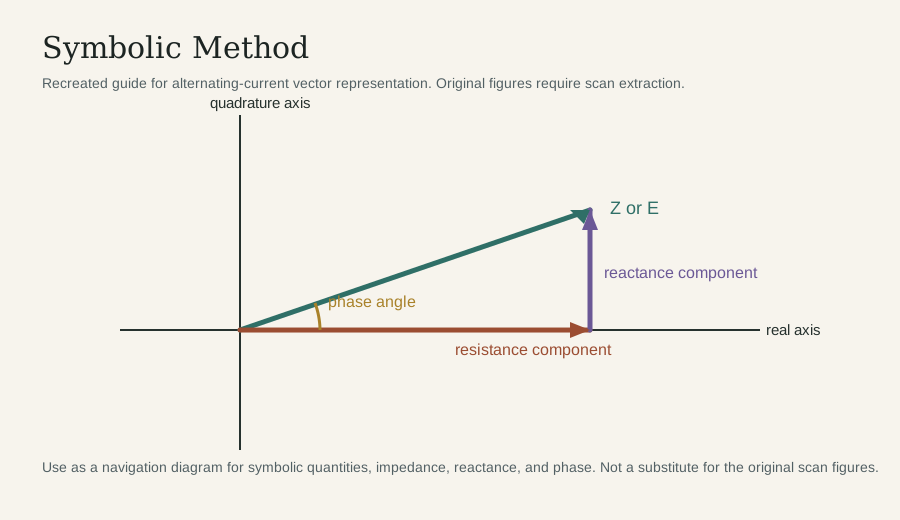
Modern reading aid for vector and complex-number representation of alternating quantities.
symbolic-method, complex-quantities, phase, phasor
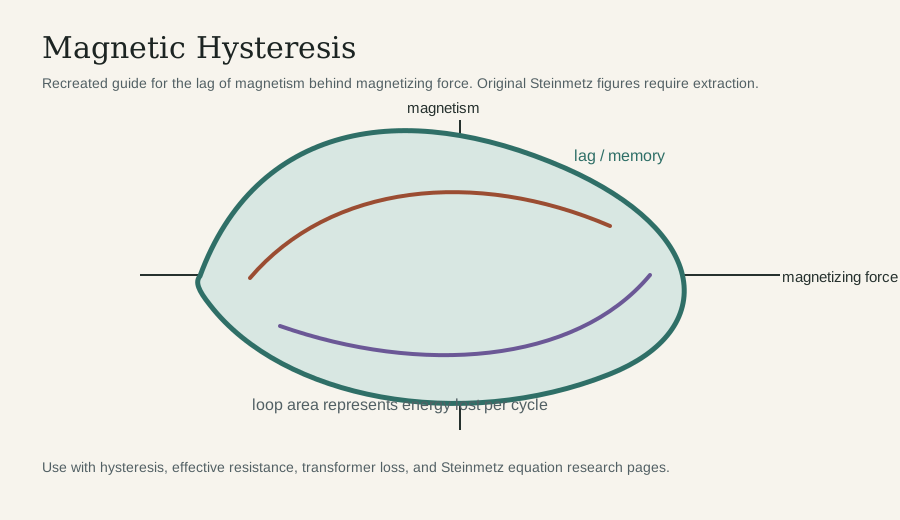
Modern guide for magnetic lag, loop area, and energy loss per cycle.
hysteresis, magnetism, magnetic-loss, effective-resistance
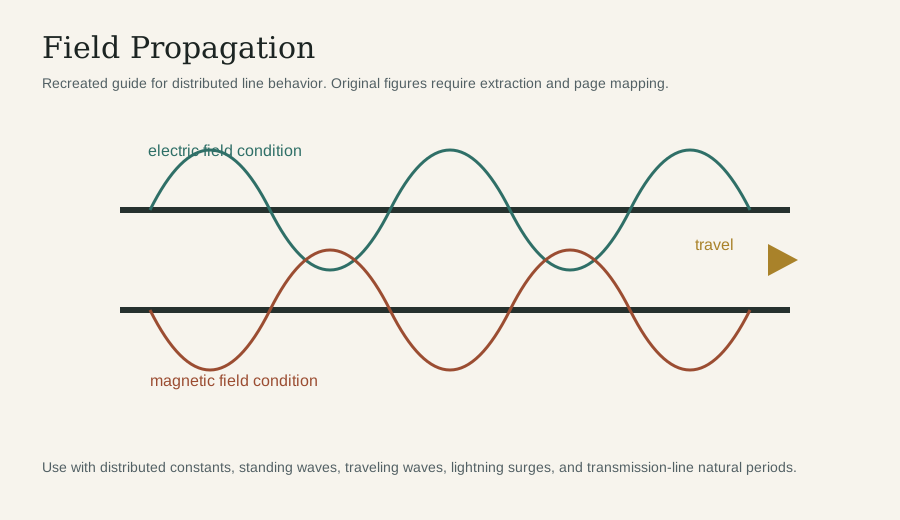
Modern reading aid for distributed constants, standing waves, traveling waves, and surge propagation.
electric-waves, distributed-constants, traveling-wave, lightning-surges
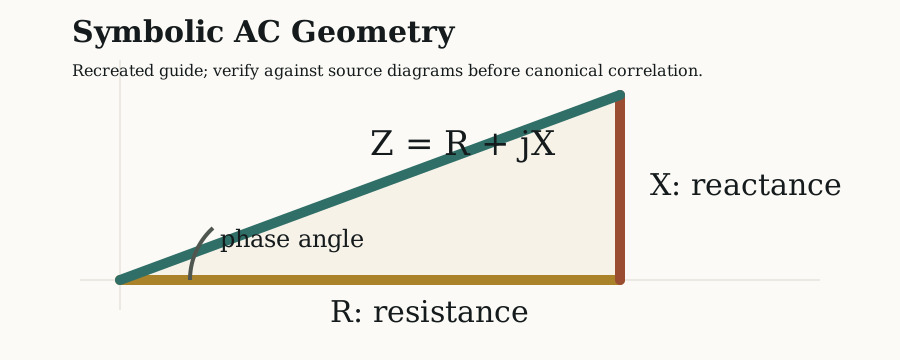
Modern guide for resistance, reactance, impedance, phase angle, and symbolic quantities.
impedance, reactance, power-factor, symbolic-method
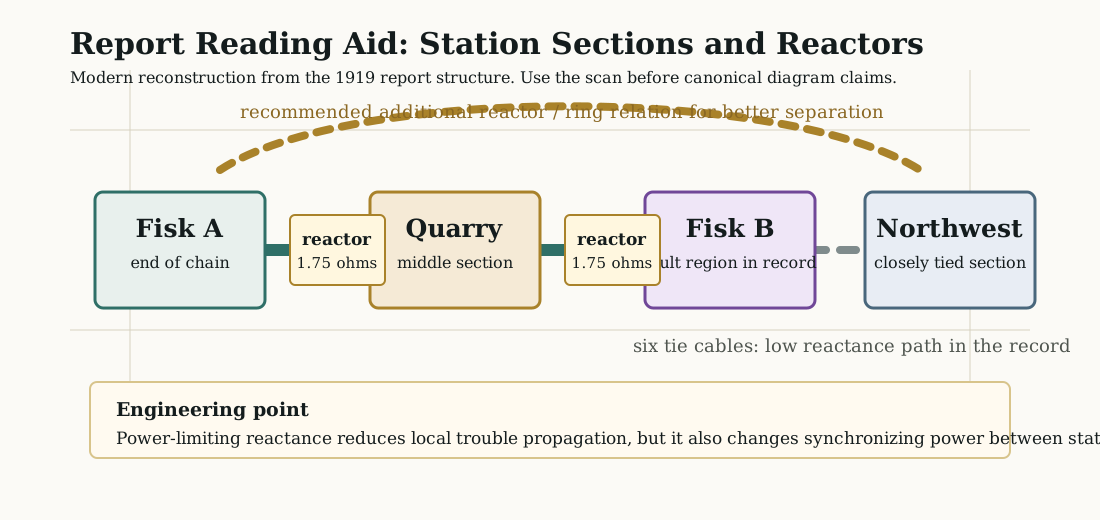
Modern reading aid for station sections, power-limiting reactors, tie cables, and synchronism.
power-limiting-reactors, synchronizing-power, reactance, power-systems
Candidate Figure Leads
Section titled “Candidate Figure Leads”| Candidate | Caption lead | Source section | Routes |
|---|---|---|---|
radiation-light-and-illumination-fig-012Fig. 12 | They are used in wireless telegraphy, etc. I here connect (Fig. 12) FIG. 12. the condenser C of the apparatus which I used for operating the ultra-violet arc, to a spark gap Gv of which the one side is con- | Radiation, Light and Illumination Lecture 1: Nature And Different Forms Of Radiation | source workbench |
radiation-light-and-illumination-fig-014Fig. 14 | as far as possible when producing light, as they consume power FIG. 14. and so lower the efficiency; the ultra-violet rays are of importance in medicine as germ killers. They are more or less destructive | Radiation, Light and Illumination Lecture 1: Nature And Different Forms Of Radiation | source workbench |
radiation-light-and-illumination-fig-021Fig. 21 | VIOLET FIG. 21. in the ultra-red and ultra-violet, where no power of radiation can produce visibility. It thus varies about as indicated in Fig. 22. | Radiation, Light and Illumination Lecture 3: Physiological Effects Of Radiation | source workbench |
radiation-light-and-illumination-fig-024Fig. 24 | \ FIG. 24. (1 meter-candle is the illumination produced by 1 candle power | Radiation, Light and Illumination Lecture 3: Physiological Effects Of Radiation | source workbench |
radiation-light-and-illumination-fig-025Fig. 25 | S FIG. 25. 62 for high intensities and changes in approximately the same range of intensities in which lwo changes; ks is also plotted in | Radiation, Light and Illumination Lecture 3: Physiological Effects Of Radiation | source workbench |
radiation-light-and-illumination-fig-027Fig. 27 | fore, increase enormously with the increase of temperature. FIG. 27. With bodies in a vacuum, the radiation power is the power input and this above law can be used to calculate the tempera- | Radiation, Light and Illumination Lecture 5: Temperature Radiation | source workbench |
radiation-light-and-illumination-fig-028Fig. 28 | weight, exhibit a periodicity in their properties which permits FIG. 28. a systematic study of their properties. In diagram Fig. 28 the | Radiation, Light and Illumination Lecture 5: Temperature Radiation | source workbench |
radiation-light-and-illumination-fig-029Fig. 29 | \ FIG. 29. power required to maintain the temperature is correspondingly less, hence the efficiency is the same and merely a larger radiator | Radiation, Light and Illumination Lecture 5: Temperature Radiation | source workbench |
radiation-light-and-illumination-fig-031Fig. 31 | one, the other from the other terminal. They are stationary FIG. 31. only if the gas pressure is perfectly constant, but separate and contract with the slightest change of pressure, hence are almost | Radiation, Light and Illumination Lecture 6: Luminescence | source workbench |
radiation-light-and-illumination-fig-059Fig. 59 | Fig. 59, is the distribution curve in one meridian, it is the same FIG. 59. in every other meridian, and for photometric test of the illumi- nant it is sufficient to measure the light intensities in one merid- | Radiation, Light and Illumination Lecture 9: Measurement Of Light And Radiation | source workbench |
radiation-light-and-illumination-fig-100Fig. 100 | candle power: FIG. 100. I. The direct-current enclosed carbon arc, with clear inner | Radiation, Light and Illumination Lecture 11: Light Intensity And Illumination | source workbench |
radiation-light-and-illumination-fig-125Fig. 125 | FIG. 124. FIG. 125. In some respects the action of the two separate flux densities | Radiation, Light and Illumination Lecture 13: Physiological Problems Of Illuminating Engineering | source workbench |
elementary-lectures-electric-discharges-waves-impulses-fig-003Fig. 3 | permanent condition corresponding to the closed switch can occur, Fig. 3. the stored energy has to be supplied from the source of power; that is, for a short time power, in supplying the stored energy, flows… | Elementary Lectures on Electric Discharges, Waves and Impulses, and Other Transients Lecture 1: Nature And Origin Of Transients | source workbench |
elementary-lectures-electric-discharges-waves-impulses-fig-025Fig. 25 | frequency, and as the result an increase of voltage and a distor- tion of the quadrature phase occurs, as shown in the oscillogram Fig. 25. Various momentary short-circuit phenomena are illustrated by the os… | Elementary Lectures on Electric Discharges, Waves and Impulses, and Other Transients Lecture 4: Single-Energy Transients In Alternating Current Circuits | source workbench |
elementary-lectures-electric-discharges-waves-impulses-fig-040Fig. 40 | Line Fig. 40. former, the high-tension switches are opened at the generator end of the transmission line. The energy stored magnetically and | Elementary Lectures on Electric Discharges, Waves and Impulses, and Other Transients Lecture 8: Traveling Waves | source workbench |
elementary-lectures-electric-discharges-waves-impulses-fig-054Fig. 54 | which it can draw in supplying power. In permanent condition the line could not add to the power, but must consume, that is, the permanent power-transmission diagram must always be like Fig. 54. Not so, as s… | Elementary Lectures on Electric Discharges, Waves and Impulses, and Other Transients Lecture 9: Oscillations Of The Compound Circuit | source workbench |
elementary-lectures-electric-discharges-waves-impulses-fig-056Fig. 56 | Line Fig. 56. The diagram of the power of the two waves of opposite direc- tions, and of the resultant power, is shown in Fig. 57, assuming | Elementary Lectures on Electric Discharges, Waves and Impulses, and Other Transients Lecture 9: Oscillations Of The Compound Circuit | source workbench |
engineering-mathematics-fig-047Fig. 47 | able to supply the charging current of the line, due to the Fig. 47. wave shape distortion, more than two generators are required. | Engineering Mathematics: A Series of Lectures Delivered at Union College Chapter 3: Trigonometric Series | source workbench |
theory-calculation-alternating-current-phenomena-fig-034Fig. 34 | 90” LAG Fig. 34. and generator currents, /i”, 72°, I^, over the topographical char- | Theory and Calculation of Alternating Current Phenomena Chapter 6: Topographic Method | source workbench |
theory-calculation-alternating-current-phenomena-fig-051Fig. 51 | Eo E Fig. 51. M | Theory and Calculation of Alternating Current Phenomena Chapter 9: Circuits Containing Resistance, Inductive Reactance, And Condensive Reactance | source workbench |
theory-calculation-alternating-current-phenomena-fig-052Fig. 52 | Eo Fig. 52. Fig. 53. | Theory and Calculation of Alternating Current Phenomena Chapter 9: Circuits Containing Resistance, Inductive Reactance, And Condensive Reactance | source workbench |
theory-calculation-alternating-current-phenomena-fig-053Fig. 53 | Fig. 52. Fig. 53. 2. Reactance in Series with a Circuit | Theory and Calculation of Alternating Current Phenomena Chapter 9: Circuits Containing Resistance, Inductive Reactance, And Condensive Reactance | source workbench |
theory-calculation-alternating-current-phenomena-fig-054Fig. 54 | ohms inductance-’— reactance-^condensance Fig. 54. E^, are shown for various conditions of a receiver circuit and | Theory and Calculation of Alternating Current Phenomena Chapter 9: Circuits Containing Resistance, Inductive Reactance, And Condensive Reactance | source workbench |
theory-calculation-alternating-current-phenomena-fig-055Fig. 55 | 0 Fig. 55. Fig. 56. | Theory and Calculation of Alternating Current Phenomena Chapter 9: Circuits Containing Resistance, Inductive Reactance, And Condensive Reactance | source workbench |
Formula Leads That Pair With The Visual Topic
Section titled “Formula Leads That Pair With The Visual Topic”| Candidate | OCR/PDF text | Source section | Routes |
|---|---|---|---|
theory-calculation-alternating-current-phenomena-eq-candidate-0294symbolic-ac | is r - j {x + Xo) = r = 0.6, x -{- Xo = 0, and tan do = 0; that | Theory and Calculation of Alternating Current Phenomena Chapter 9: Circuits Containing Resistance, Inductive Reactance, And Condensive Reactance | source workbench |
theory-calculation-electric-apparatus-eq-candidate-0028symbolic-ac | = - J = (tan a - j) (7) | Theory and Calculation of Electric Apparatus Chapter 1: Speed Control Of Induction Motors | source workbench |
theoretical-elements-electrical-engineering-eq-candidate-0132symbolic-ac | If an alternating current i = I0 sin 6 passes through a resist- | Theoretical Elements of Electrical Engineering Theory Section 4: Power and Effective Values | source workbench |
theory-calculation-alternating-current-phenomena-1900-eq-candidate-0156apparatus-systems | E.M.F. of the generator OE°, where Z0 = r0 - jx0 = inter- | Theory and Calculation of Alternating Current Phenomena Chapter 6: Topographic Method | source workbench |
theoretical-elements-electrical-engineering-eq-candidate-0138symbolic-ac | e.m.f., e = EQ sin 6. | Theoretical Elements of Electrical Engineering Theory Section 4: Power and Effective Values | source workbench |
general-lectures-electrical-engineering-eq-candidate-0026symbolic-ac | copper of No. 5, or j of ;j = ^: Cu. = ^ | General Lectures on Electrical Engineering Lecture 3: Light And Power Distribution | source workbench |
commonwealth-edison-generating-system-trouble-eq-sync-emfs-0001apparatus-systems | e1 = E cos(…); e2 = E cos(…), OCR candidate | Investigation of Some Trouble in the Generating System of the Commonwealth Edison Co. Mathematical Appendix 5: Appendix: Synchronous Operation | source workbench |
commonwealth-edison-generating-system-trouble-eq-candidate-0007apparatus-systems | ei = E cos (0 | Investigation of Some Trouble in the Generating System of the Commonwealth Edison Co. Mathematical Appendix 5: Appendix: Synchronous Operation | source workbench |
commonwealth-edison-generating-system-trouble-eq-resultant-voltage-0002apparatus-systems | e = e1 - e2 = 2E sin(…) sin(…), OCR candidate | Investigation of Some Trouble in the Generating System of the Commonwealth Edison Co. Mathematical Appendix 5: Appendix: Synchronous Operation | source workbench |
commonwealth-edison-generating-system-trouble-eq-interchange-current-0003apparatus-systems | i = (2E / z) sin(…) sin(…), OCR candidate | Investigation of Some Trouble in the Generating System of the Commonwealth Edison Co. Mathematical Appendix 5: Appendix: Synchronous Operation | source workbench |
commonwealth-edison-generating-system-trouble-eq-impedance-angle-0004apparatus-systems | z = sqrt(r^2 + x^2); tan a = x / r, OCR candidate | Investigation of Some Trouble in the Generating System of the Commonwealth Edison Co. Mathematical Appendix 5: Appendix: Synchronous Operation | source workbench |
commonwealth-edison-generating-system-trouble-eq-candidate-0024apparatus-systems | p’Y=-!|cos(2a>-a) | Investigation of Some Trouble in the Generating System of the Commonwealth Edison Co. Mathematical Appendix 5: Appendix: Synchronous Operation | source workbench |
commonwealth-edison-generating-system-trouble-eq-candidate-0027apparatus-systems | P=- sin a sin 2co | Investigation of Some Trouble in the Generating System of the Commonwealth Edison Co. Mathematical Appendix 5: Appendix: Synchronous Operation | source workbench |
commonwealth-edison-generating-system-trouble-eq-candidate-0039apparatus-systems | W= ^-sin a (1-cos 2 Wo ) | Investigation of Some Trouble in the Generating System of the Commonwealth Edison Co. Mathematical Appendix 5: Appendix: Synchronous Operation | source workbench |
commonwealth-edison-generating-system-trouble-eq-candidate-0105apparatus-systems | 2Eo sin wo = I (2xx+x) | Investigation of Some Trouble in the Generating System of the Commonwealth Edison Co. Mathematical Appendix 5: Appendix: Synchronous Operation | source workbench |
theoretical-elements-electrical-engineering-eq-candidate-0133symbolic-ac | i*r = 702r sin2 0 = ^r C1 ~ cos 2 0), | Theoretical Elements of Electrical Engineering Theory Section 4: Power and Effective Values | source workbench |
theoretical-elements-electrical-engineering-eq-candidate-0168symbolic-ac | e = E0 sin (0 - 0i) = 273 sin (0 - 0i) ; | Theoretical Elements of Electrical Engineering Theory Section 4: Power and Effective Values | source workbench |
theoretical-elements-electrical-engineering-eq-candidate-0170symbolic-ac | e = 273 sin 210 (t - h). | Theoretical Elements of Electrical Engineering Theory Section 4: Power and Effective Values | source workbench |
Editorial Use
Section titled “Editorial Use”This gallery is meant for discovery, not final citation. The strongest current source distribution is: Theory and Calculation of Electric Circuits (337), Theory and Calculation of Electric Apparatus (313), Theory and Calculation of Alternating Current Phenomena (291), Investigation of Some Trouble in the Generating System of the Commonwealth Edison Co. (221). Promote a diagram or formula only after the scan, page label, exact caption, and mathematical notation are checked.