Original Transient Electric Phenomena Figures
These are original scan-derived crops from Charles Proteus Steinmetz’s Theory and Calculation of Transient Electric Phenomena and Oscillations. They are promoted documentary assets with crop manifests and checksums in diagrams/original/theory-calculation-transient-electric-phenomena-oscillations/figures/.
This set is the first visual anchor for the transient side of the archive. It shows Steinmetz moving from a general transient term to condenser charge, critical damping, oscillatory charge, and decrement of oscillation.
Promoted Crops
Section titled “Promoted Crops”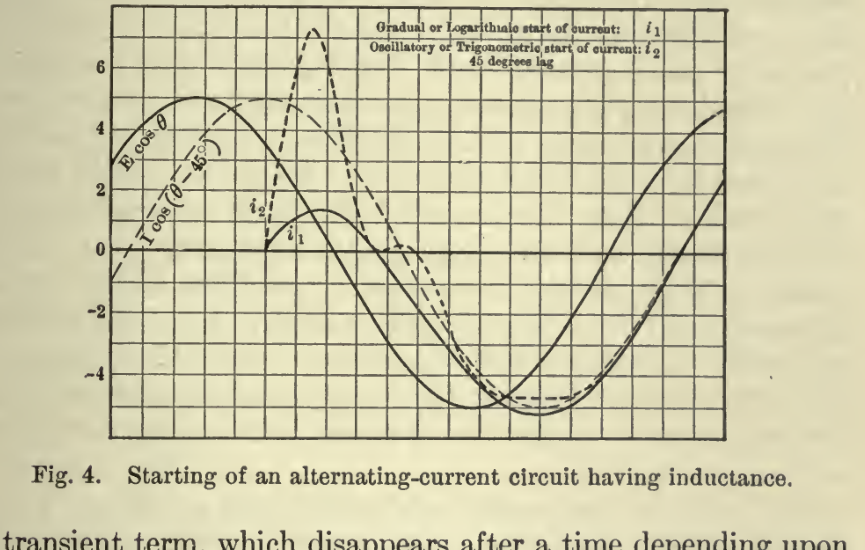
Printed page 21. Contrasts a gradual/logarithmic start with an oscillatory/trigonometric start.
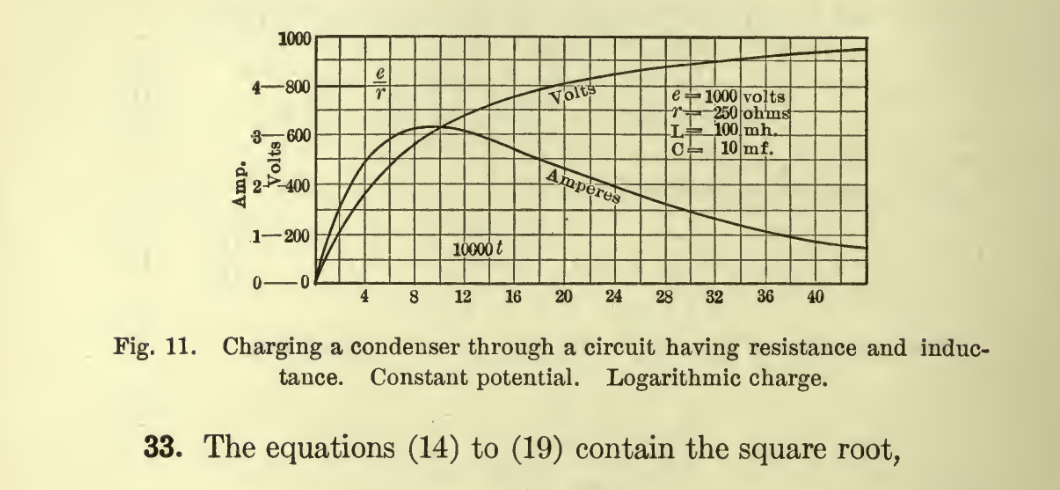
Printed page 52. High resistance gives a non-oscillatory charge curve.
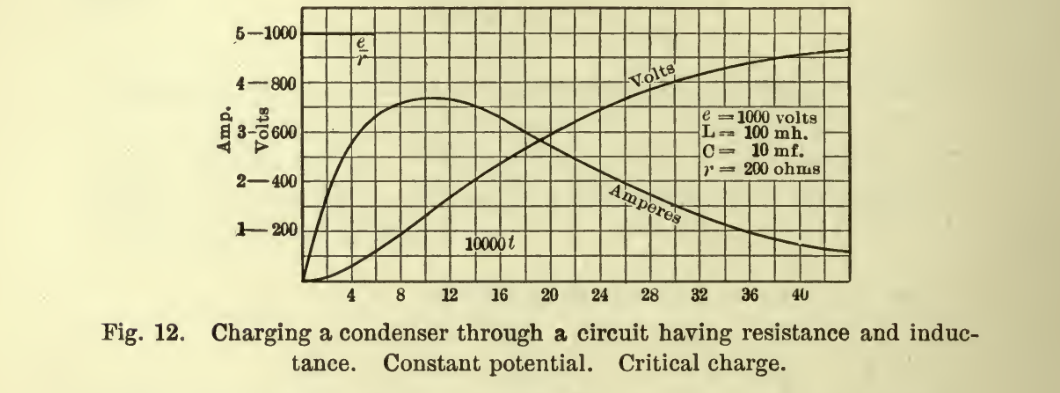
Printed page 58. The boundary case between logarithmic and oscillating behavior.
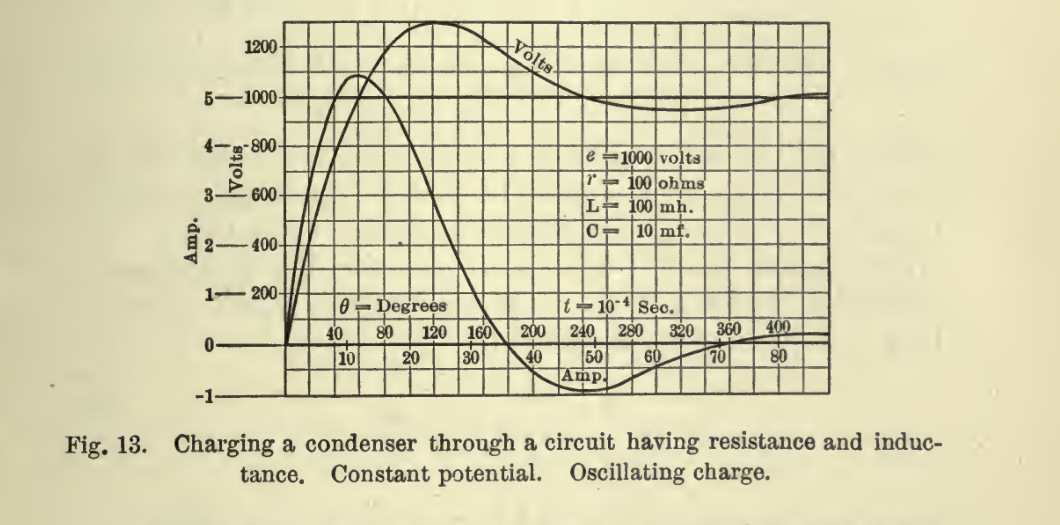
Printed page 61. Lower resistance lets current and condenser potential oscillate while decaying.
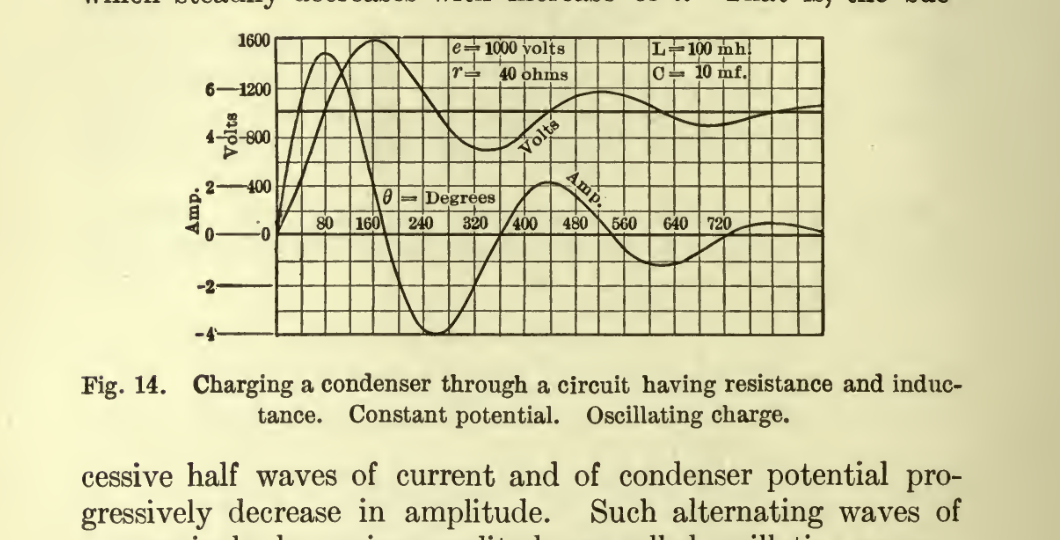
Printed page 62. A stronger oscillatory case with successive half waves decreasing in amplitude.
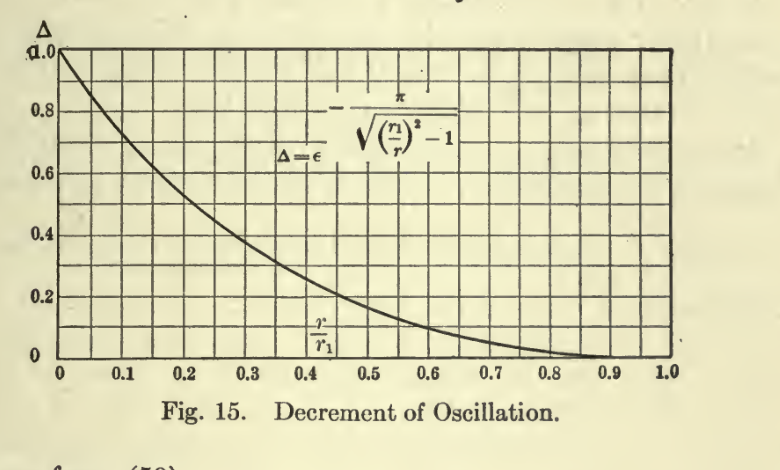
Printed page 65. Plots decrement against resistance as a fraction of critical resistance.
Modern Redraw Sheet
Section titled “Modern Redraw Sheet”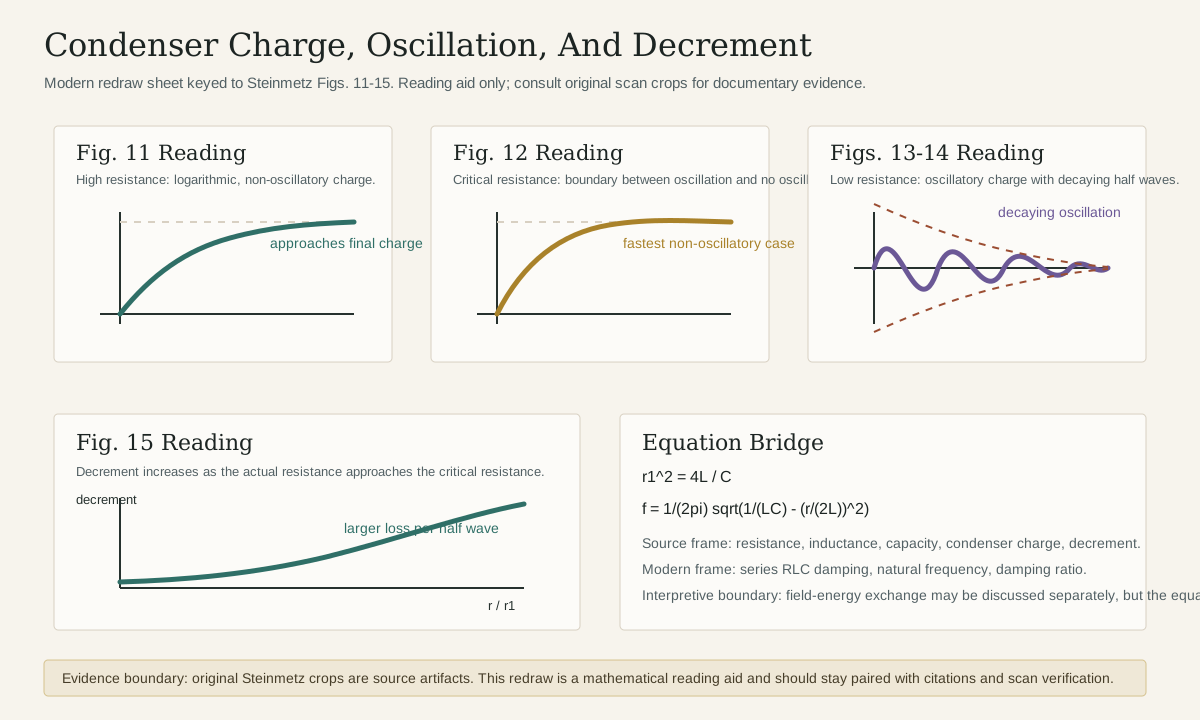
This redraw sheet is a mathematical reading aid for Figs. 11-15. It separates the high-resistance logarithmic case, the critical boundary, the low-resistance oscillatory case, and the decrement curve. It should always be read beside the original crops above and the equation page, because the redraw clarifies the structure but does not replace the source.
Source-Grounded Reading
Section titled “Source-Grounded Reading”| Figure | Source Function | Modern Reading |
|---|---|---|
| Fig. 4 | Shows transient current as either gradual or oscillatory. | Introductory visual distinction between overdamped-like and underdamped-like response. |
| Figs. 11-12 | Show logarithmic and critical condenser charge cases. | Non-oscillatory RLC transition behavior. |
| Figs. 13-14 | Show oscillating condenser charge with decaying current and potential waves. | Underdamped RLC charge/discharge behavior. |
| Fig. 15 | Relates decrement to resistance ratio. | Damping ratio/decrement view of oscillation decay. |
Related Pages
Section titled “Related Pages”- Condenser Charge and Discharge
- Condenser Oscillation Frequency and Decrement
- Transient Phenomena
- Oscillation and Damping
Review State
Section titled “Review State”These crops are source-derived and page-located, but they still need second-pass bibliographic review and crop-coordinate review before being marked canonical. A modern redraw sheet now exists as a reading aid, but it remains secondary to the scans.