Steinmetz Decoded
A source-grounded research codex
Steinmetz Decoded

Charles Proteus Steinmetz, Library of Congress Bain Collection. Wikimedia Commons marks the file as public domain / no known publication restrictions in the United States.
Why This Archive Exists
Section titled “Why This Archive Exists”Steinmetz is often reduced to a handful of phrases: wizard of Schenectady, AC genius, hysteresis law, complex numbers. That is not enough. His books and lectures preserve an older electrical grammar in which mathematics, field language, apparatus behavior, waves, and practical engineering still sit close together.
The archive is designed for engineers, historians, students, Tesla-era researchers, field-language readers, and open-minded alternative-science researchers who need one thing above all: strict attribution. A page may contain Steinmetz’s explicit wording, modern engineering translation, mathematical reconstruction, historical context, and ether-field interpretation, but those layers must never be allowed to blur into one another.
Raw scans, OCR, manifests, checksums, source links, and status badges remain visible before commentary begins.
Original notation is kept where possible, then translated into modern engineering form with derivations and tools.
Historical fact, modern translation, Tesla-era comparison, and ether-field readings are separated by layer.
Steinmetz At A Glance
Section titled “Steinmetz At A Glance”
Circa 1900 portrait from The Henry Ford collection, via Wikimedia Commons.
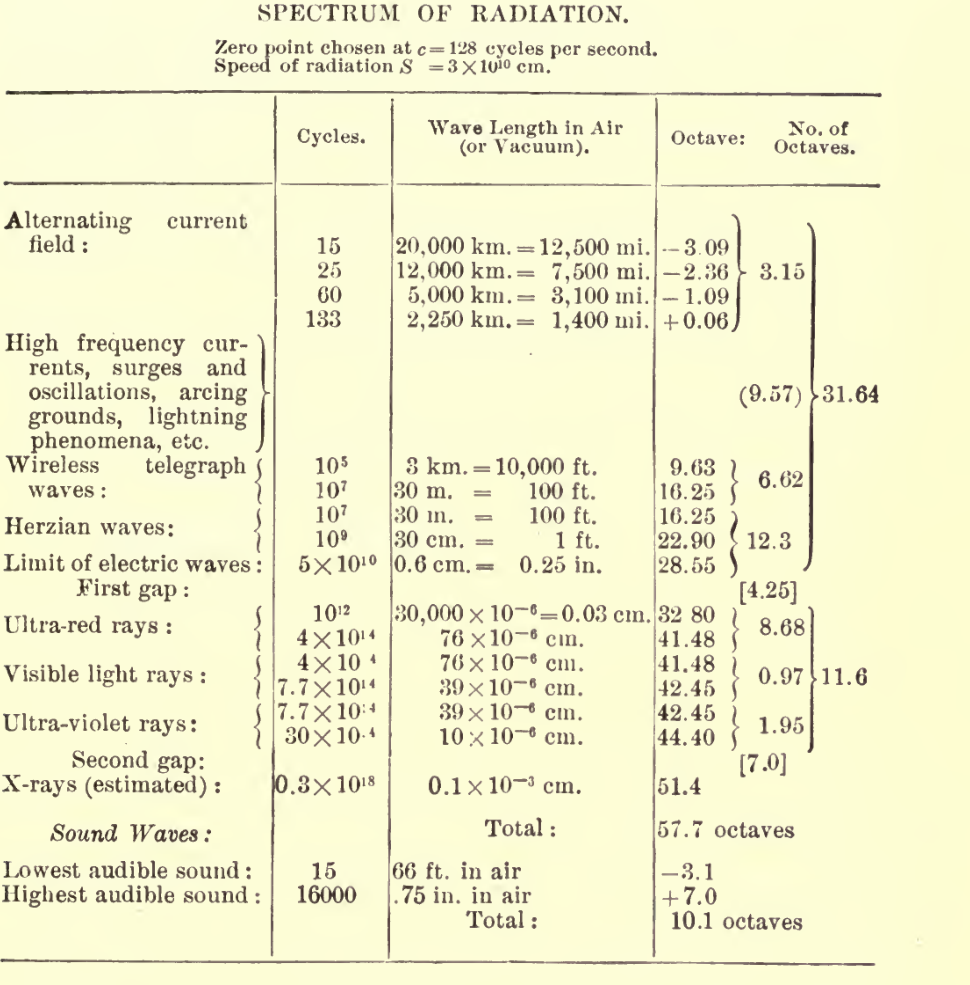
The site anchors visual interpretation in original scan crops whenever possible.
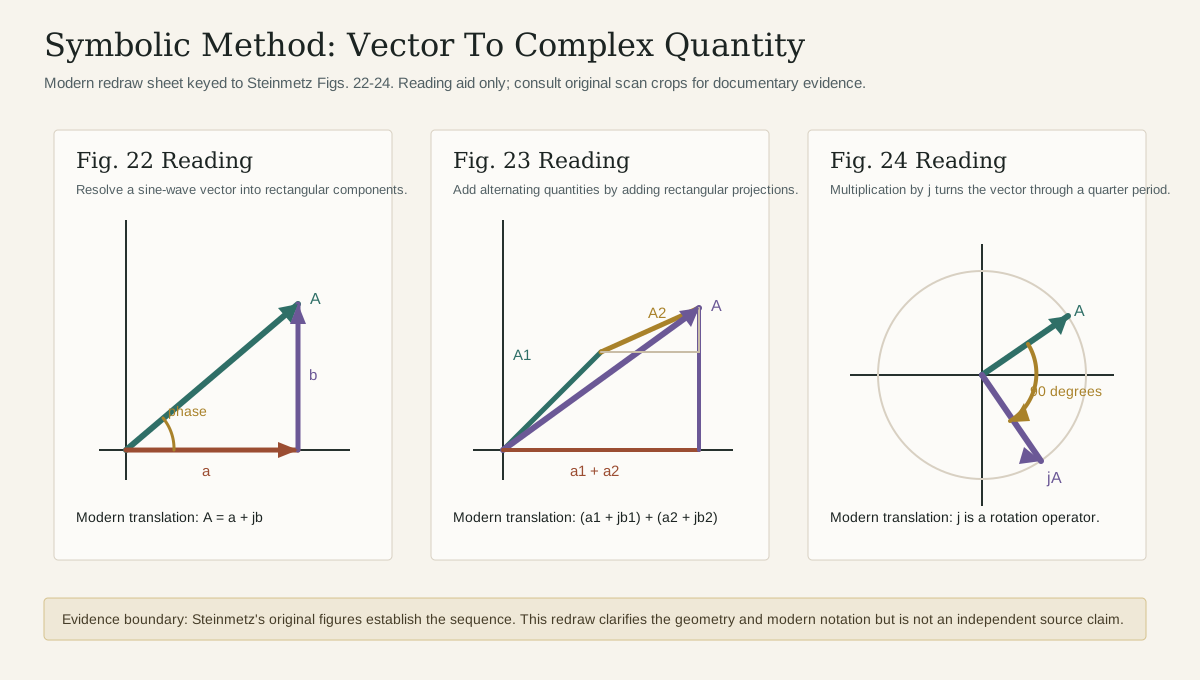
Modern redraws are marked as reconstruction, not substitution for the scan.
- Born in Breslau in 1865 as Carl August Rudolph Steinmetz; later known in the United States as Charles Proteus Steinmetz.
- Became one of the central mathematical architects of practical alternating-current engineering.
- Worked at Eickemeyer and then General Electric, where his analysis of AC machinery, hysteresis, transients, and power systems became foundational.
- Taught and lectured at Union College, leaving books that read like a working bridge between physics, mathematics, and industrial electrical engineering.
- Left a body of books, articles, lectures, diagrams, and patents large enough to require a real research engine, not a summary site.
Current Research Front
Section titled “Current Research Front”Reader Tools
Section titled “Reader Tools”The lower-right reader panel adds three site-wide controls:
Steinmetz onlyhides modern, comparison, and interpretive sections so the reader can stay closer to source material.Ask this pagesearches only the visible text on the current page and returns matching passages without inventing an answer.Translateopens the current page through Google Translate in the selected language.
Diagrams and portrait images are also zoomable. Click any major figure to open a lightbox viewer.
The generated book coverage atlas exposes every processed source at the book level before the reader drops into section pages. The source-text browser exposes every processed chapter, lecture, section, and report division currently in the archive. The chapter workbench adds section-level research maps for the same corpus: source snippets, theme routing, glossary hits, equation candidates, figure candidates, quote candidates, and promotion checklists. The concept concordance searches the same corpus for core terms and links each hit back to the source text and workbench. Use these for broad research; use scan-verified pages for exact quotation and canonical math.
The completion audit, world-class criteria, editorial policy, canonical review workflow, citation/data export, notation ledger, diagram provenance ledger, schema reference, expert review packet, release-level, accessibility-audit, edition-comparison, and patent-bridge pages define the stricter finish line: not just pages, but source custody, scan verification, mathematical fidelity, diagram provenance, reusable data, accessibility, and expert review.
Visual Reading Aids
Section titled “Visual Reading Aids”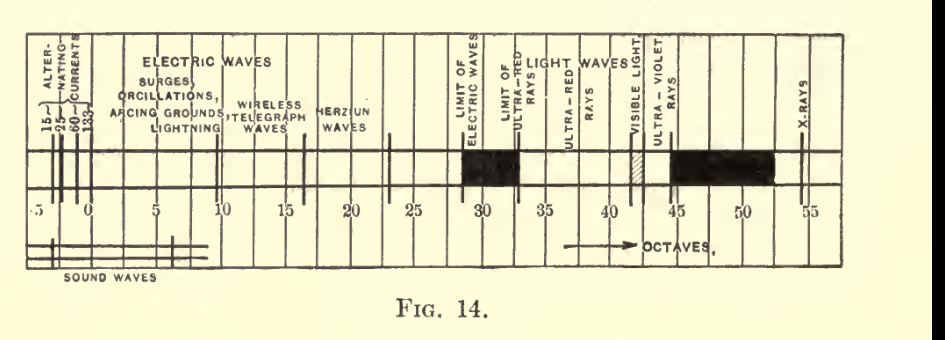
Scan crop from Radiation, Light and Illumination, used before any modern reconstruction.
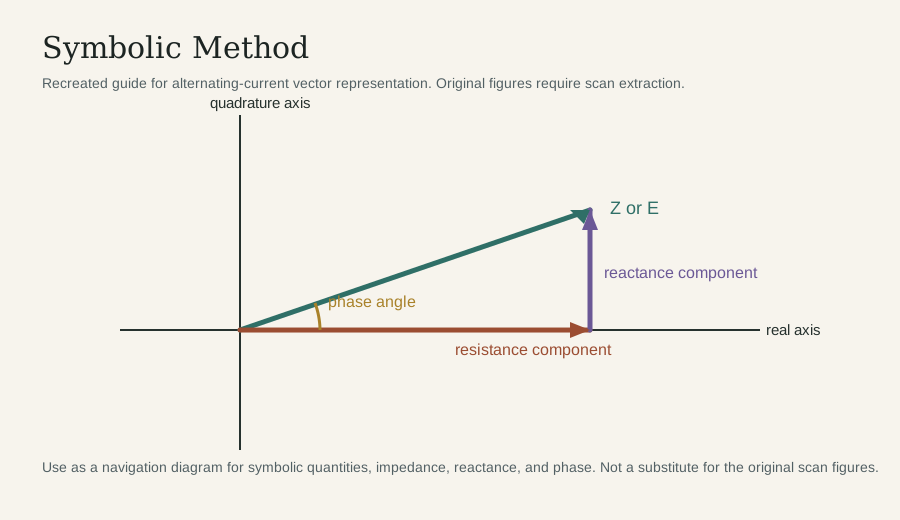
Vector and complex representations of alternating quantities.
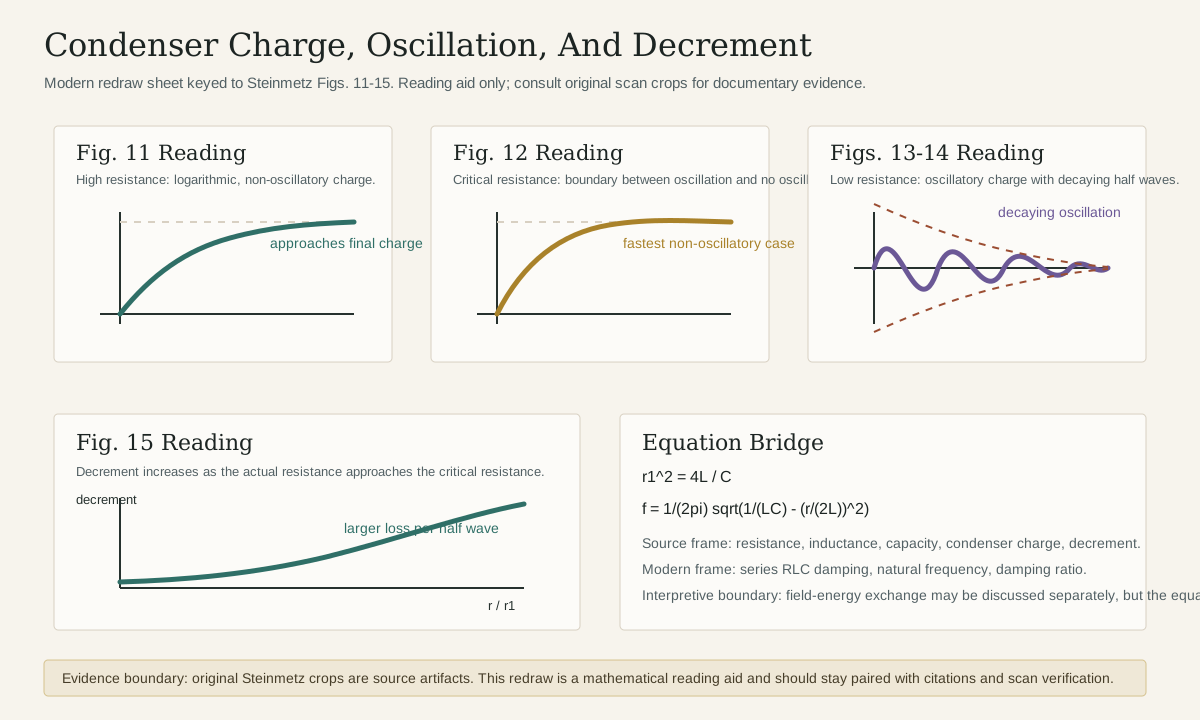
Condenser charge, discharge, logarithmic decay, and oscillatory decrement.
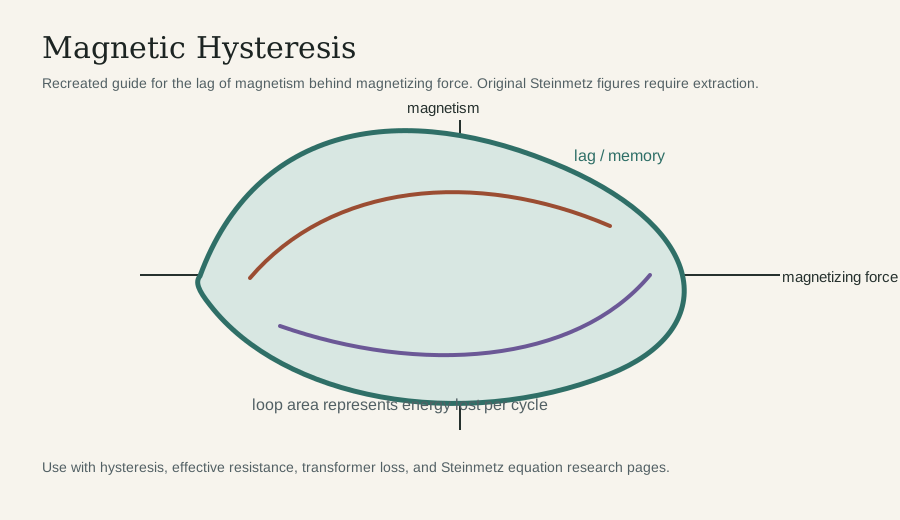
Lag, magnetic memory, and energy lost per cycle.
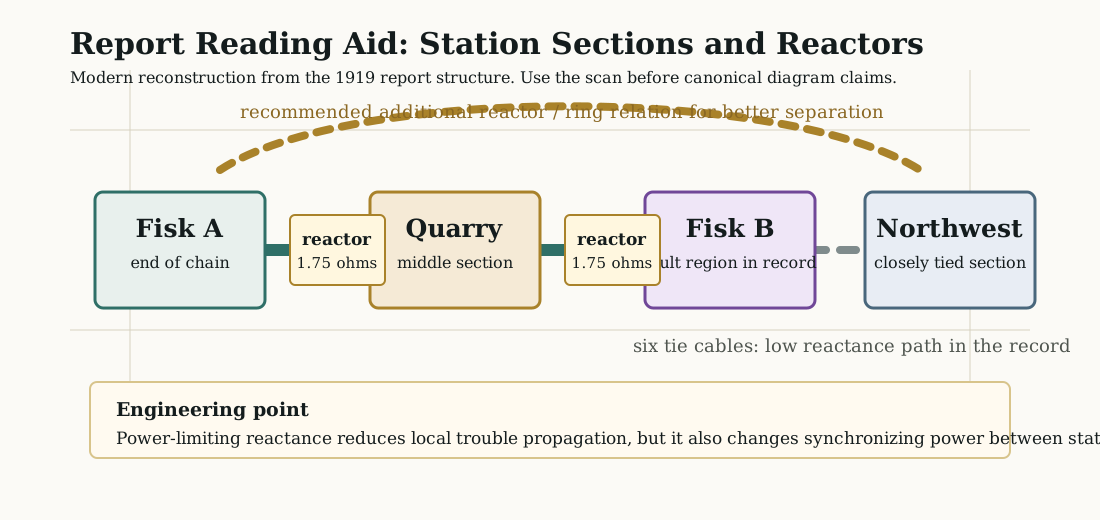
Station sections, tie cables, reactors, synchronism, and post-fault recovery.
Research Covenant
Section titled “Research Covenant”What Steinmetz explicitly states
Claims in this layer must be traceable to a source text, page, scan crop, OCR line, or manifest record.
Modern equivalent
Modern engineering translation is useful only when it remains attached to the original notation and source context.
Ether-field interpretive reading
This layer is welcome, but it is always marked as interpretation. It cannot be treated as proof of what Steinmetz historically meant unless a passage supports it.