AC Symbolic Geometry
Visual topic gallery
AC Symbolic Geometry
Visual routes through vectors, rectangular components, complex quantities, j rotation, impedance, reactance, admittance, and phasor thinking.
modern guide diagrams
reconstructions, not historical evidencefigure candidates
OCR/PDF-text leads needing crop reviewformula candidates
math leads needing transcription reviewsource routes
source text, workbench, visual and formula mapsLayer rule: original crops, figure candidates, modern redraws, and formula candidates are separated. Use this page to browse visually, then verify in the linked source text and workbench.
Source Routes
Section titled “Source Routes”Modern Guide Diagrams
Section titled “Modern Guide Diagrams”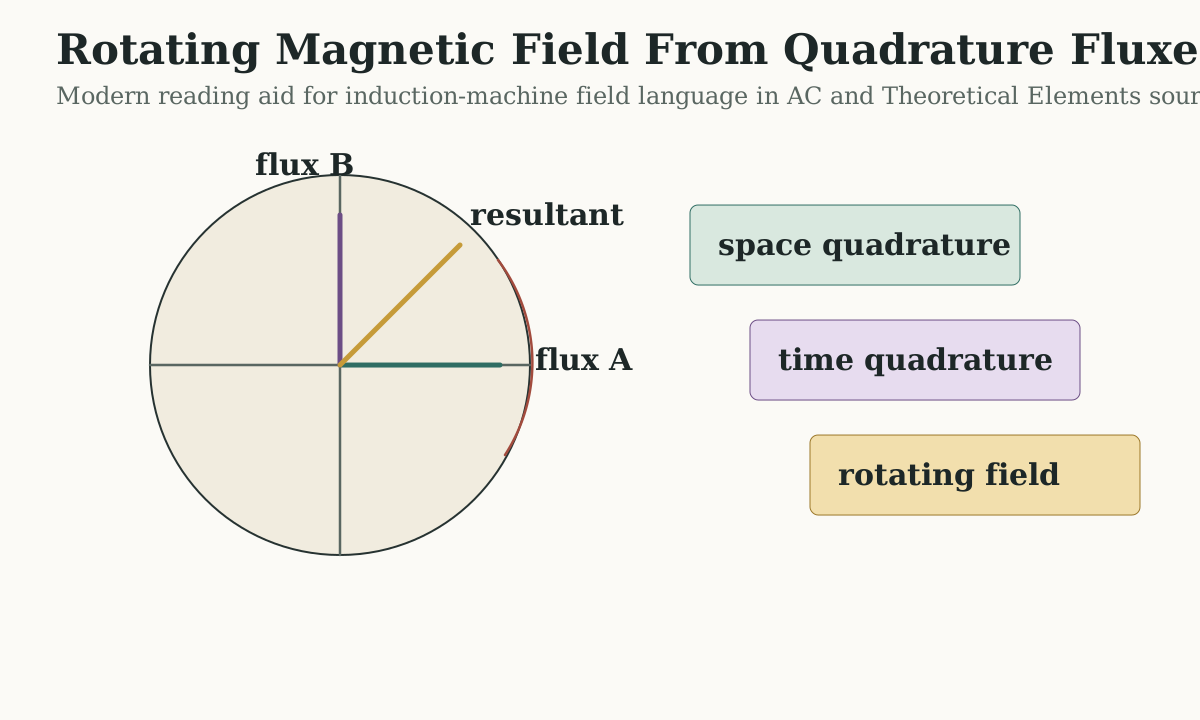
Modern reading aid for induction-machine field language in AC and Theoretical Elements sources.
symbolic-method, magnetism, phase, induction-motor
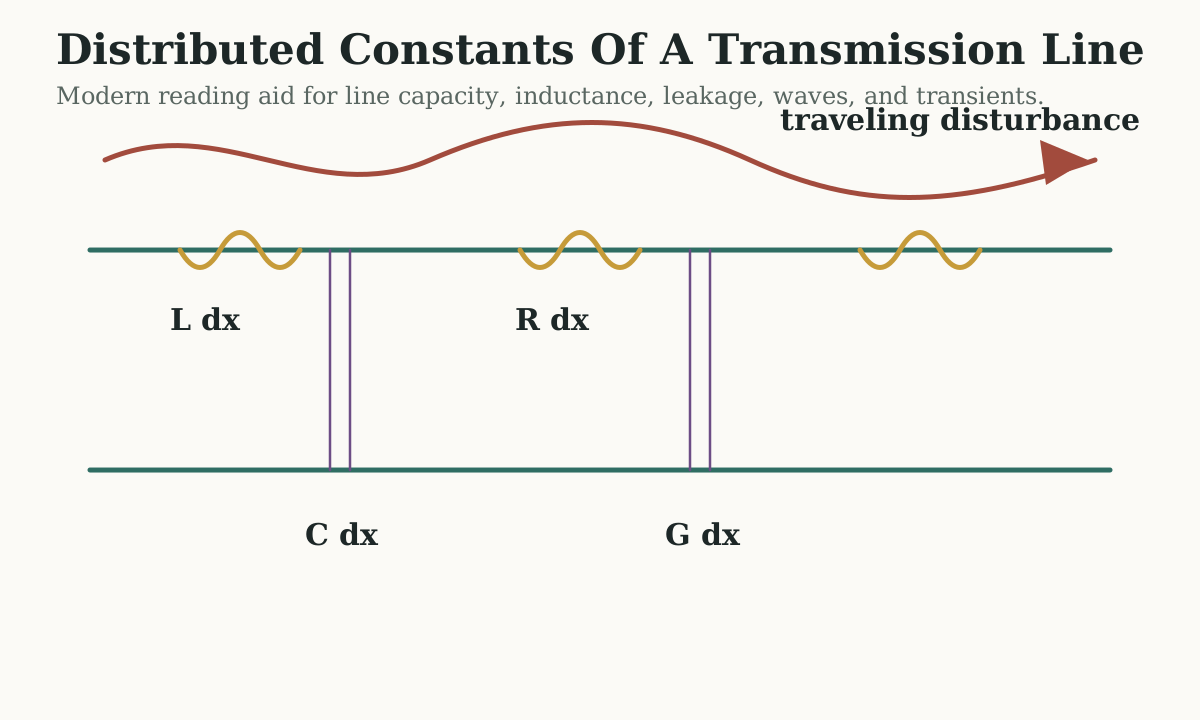
Modern reading aid for line capacity, inductance, leakage, waves, and transients.
distributed-constants, capacity, inductance, waves
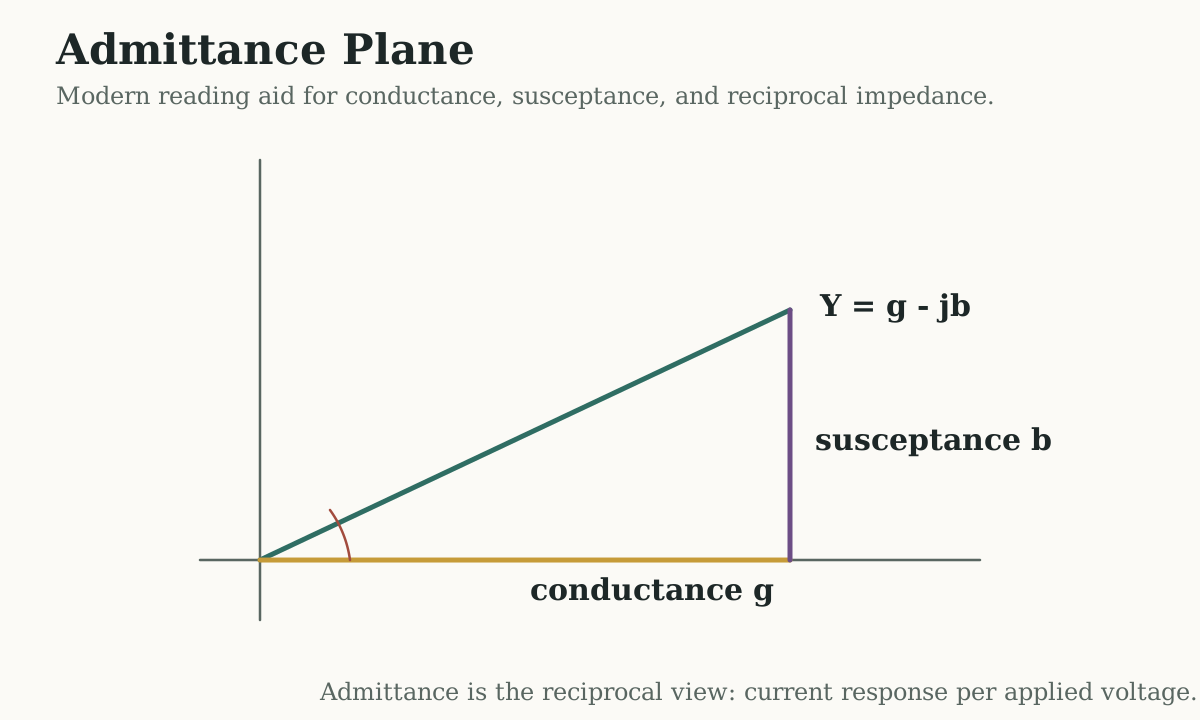
Modern reading aid for conductance, susceptance, and reciprocal impedance.
admittance, conductance, susceptance, symbolic-method
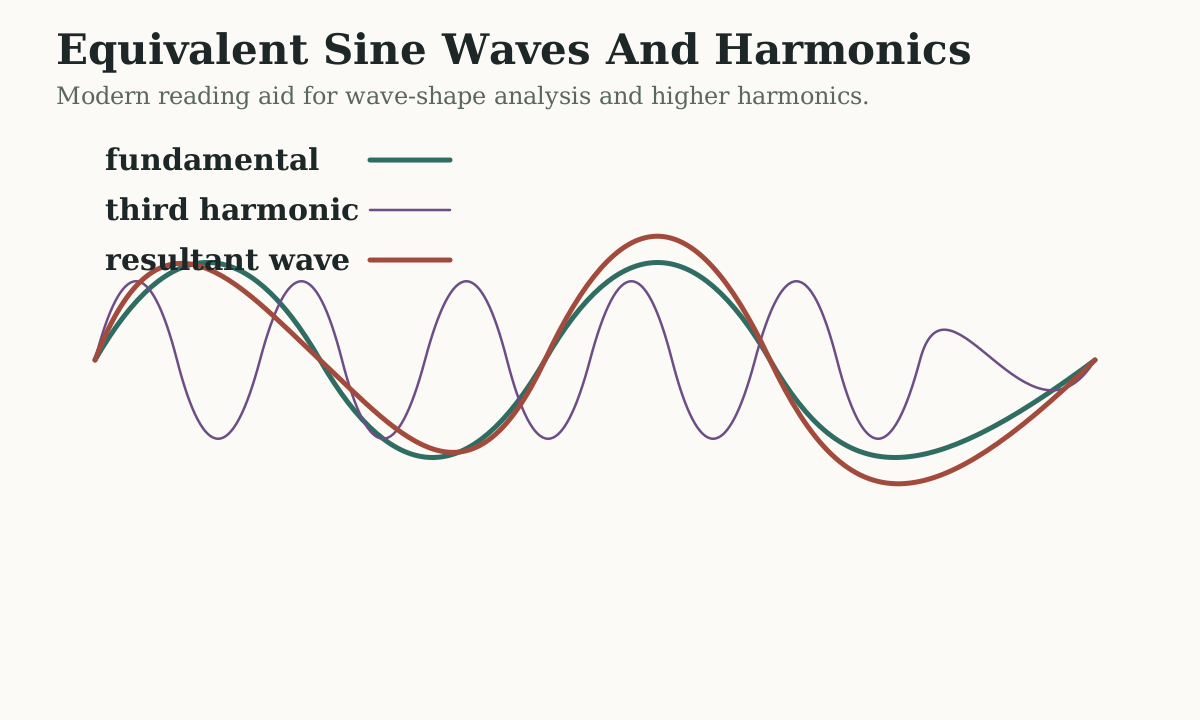
Modern reading aid for wave-shape analysis and higher harmonics.
harmonics, wave-shape, fourier-analysis
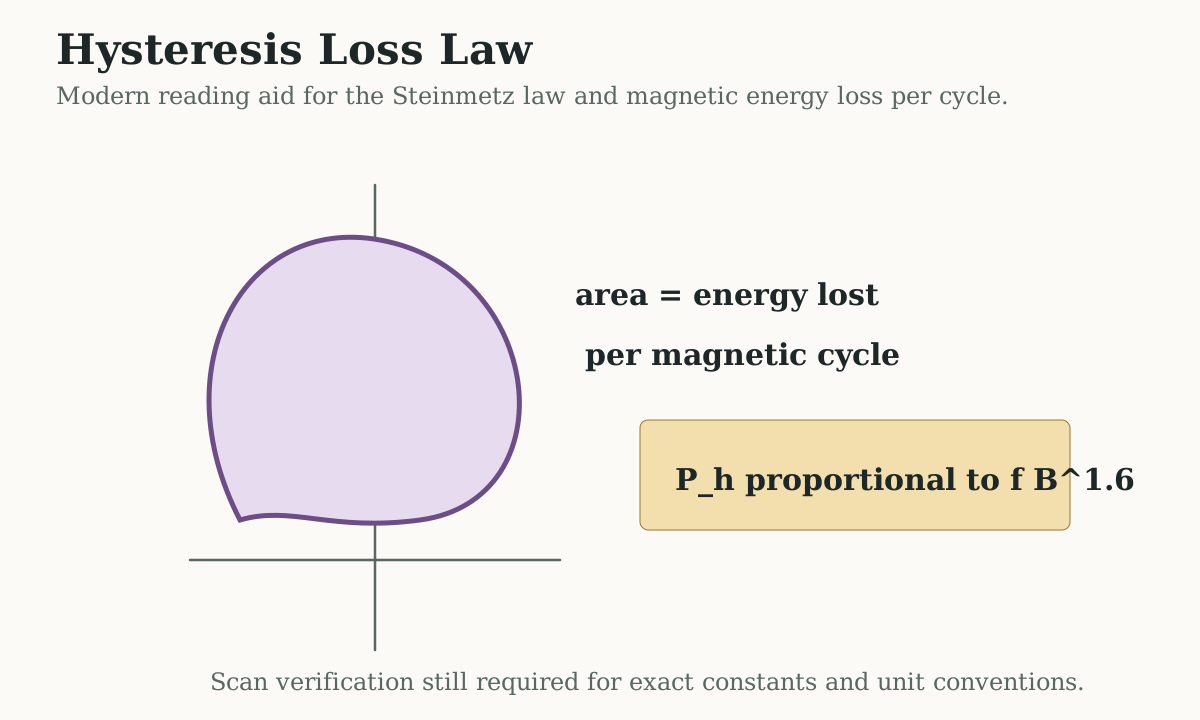
Modern reading aid for the Steinmetz law and magnetic energy loss per cycle.
hysteresis, magnetic-loss, effective-resistance
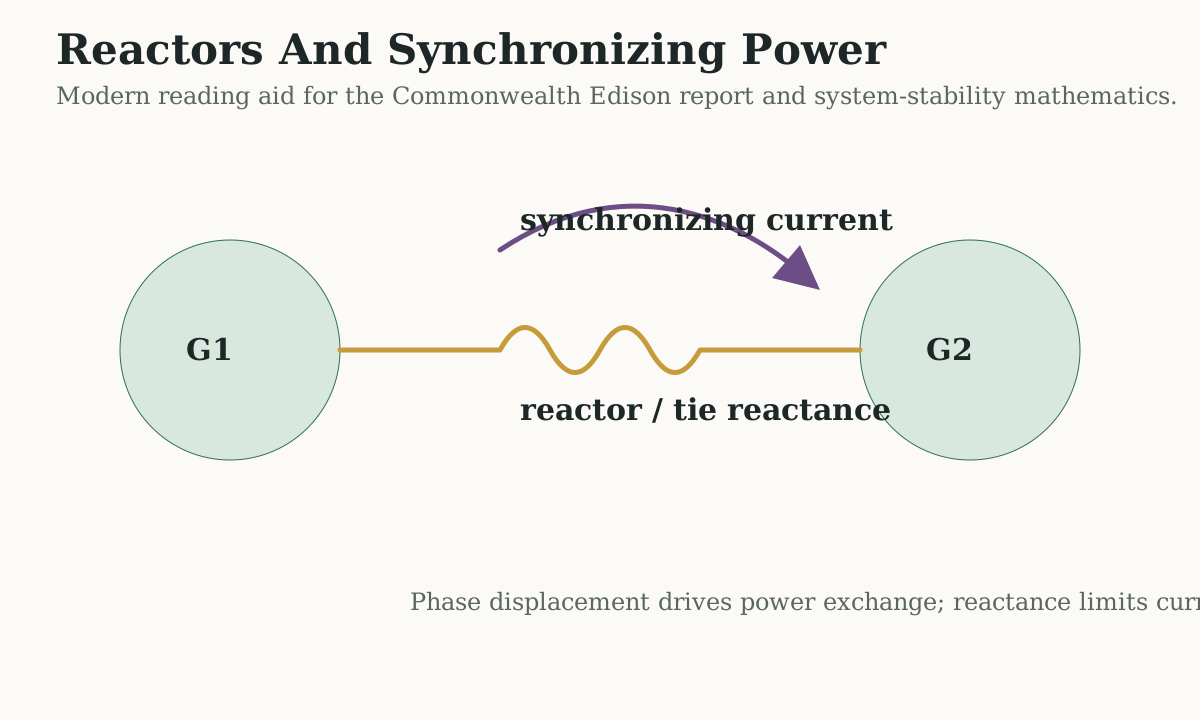
Modern reading aid for the Commonwealth Edison report and system-stability mathematics.
synchronizing-power, power-limiting-reactors, reactance
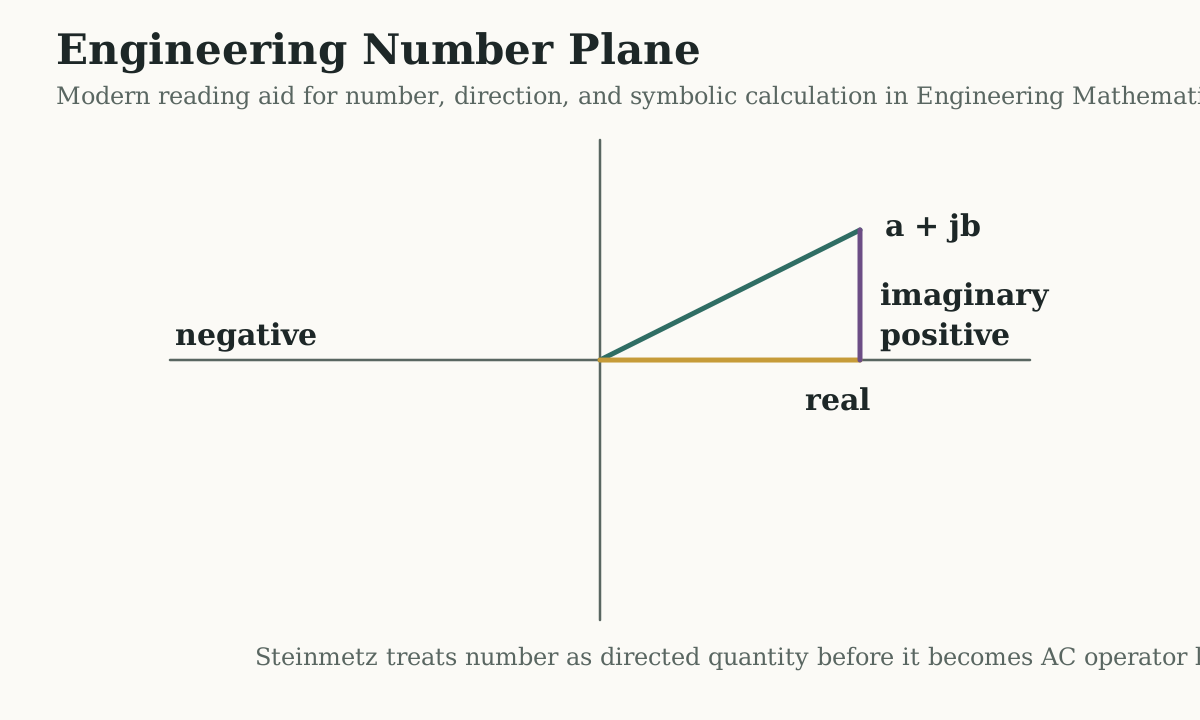
Modern reading aid for number, direction, and symbolic calculation in Engineering Mathematics.
complex-quantities, number, symbolic-method
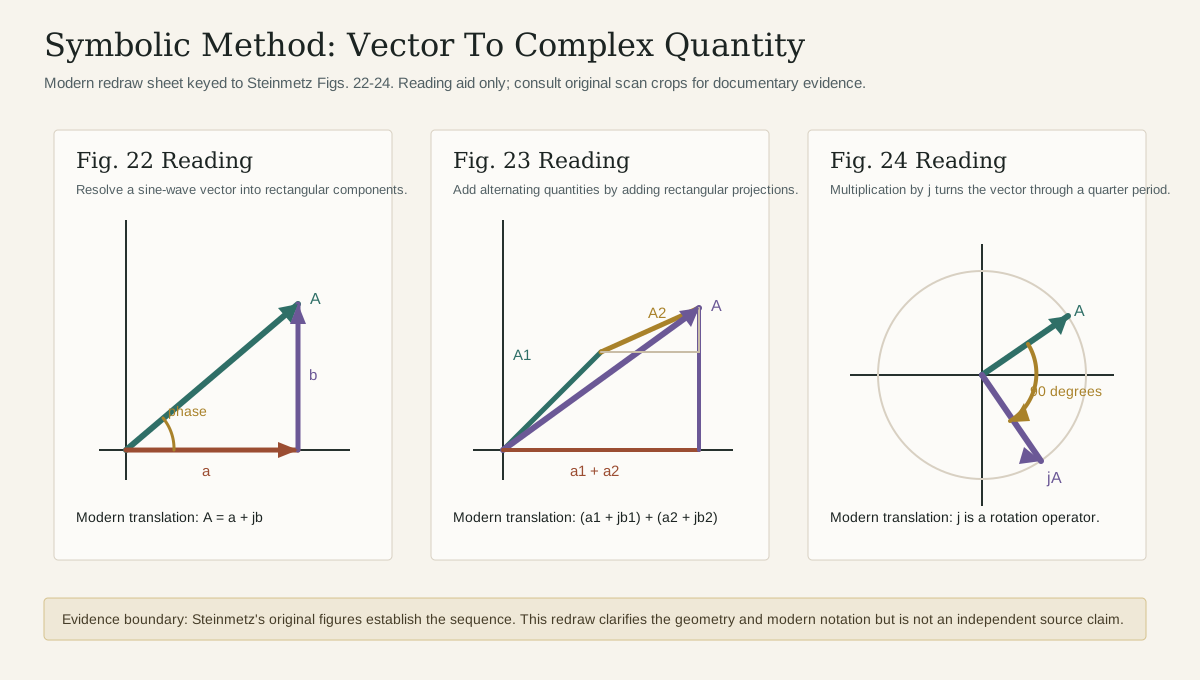
Modern redraw sheet for rectangular components, resultant addition, and quarter-period j rotation.
symbolic-method, complex-quantities, phasor, operator-j
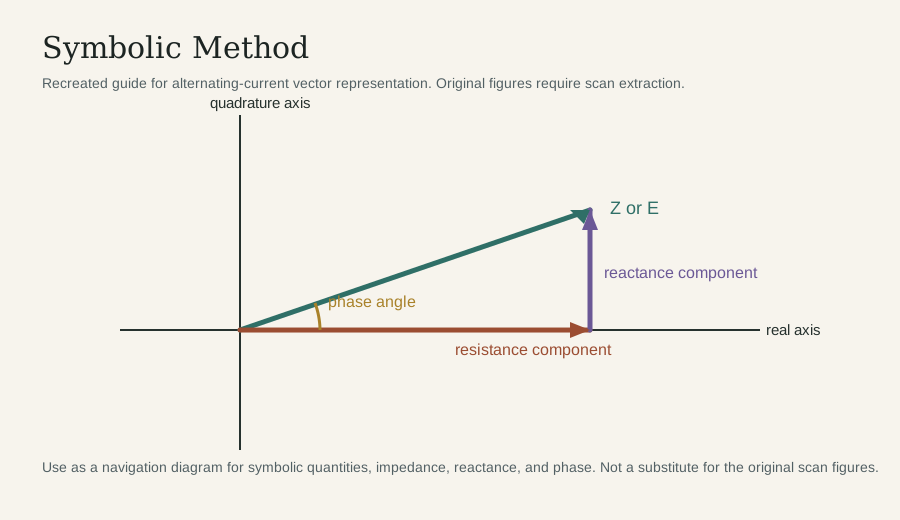
Modern reading aid for vector and complex-number representation of alternating quantities.
symbolic-method, complex-quantities, phase, phasor
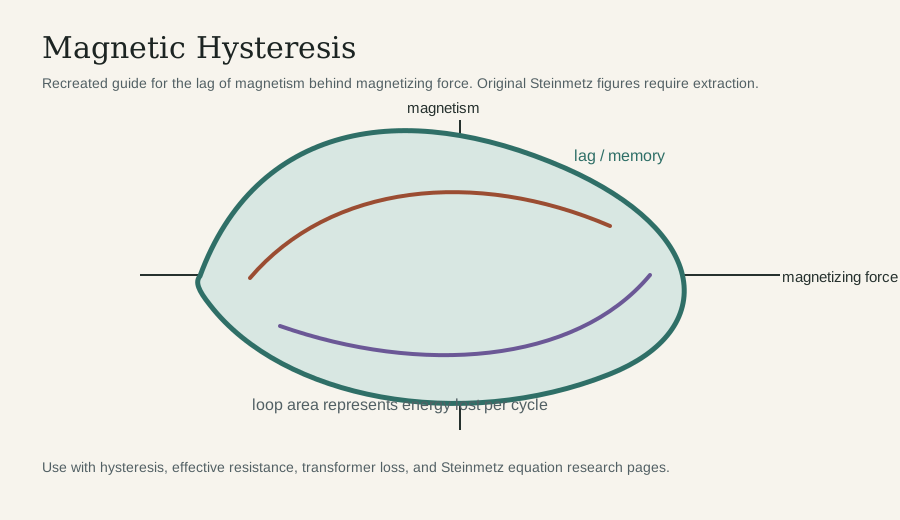
Modern guide for magnetic lag, loop area, and energy loss per cycle.
hysteresis, magnetism, magnetic-loss, effective-resistance
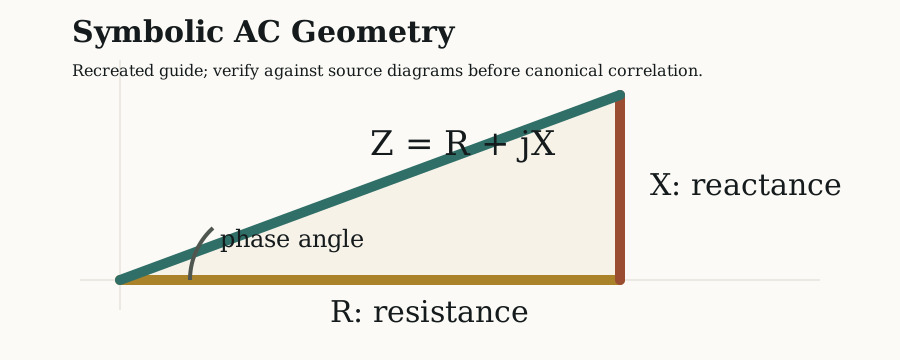
Modern guide for resistance, reactance, impedance, phase angle, and symbolic quantities.
impedance, reactance, power-factor, symbolic-method
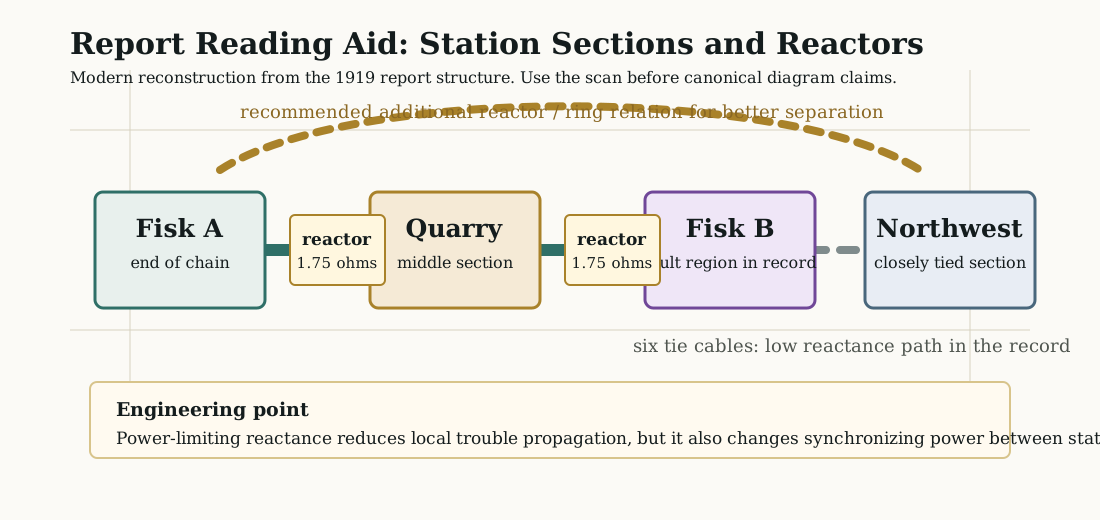
Modern reading aid for station sections, power-limiting reactors, tie cables, and synchronism.
power-limiting-reactors, synchronizing-power, reactance, power-systems
Candidate Figure Leads
Section titled “Candidate Figure Leads”| Candidate | Caption lead | Source section | Routes |
|---|---|---|---|
elementary-lectures-electric-discharges-waves-impulses-fig-025Fig. 25 | frequency, and as the result an increase of voltage and a distor- tion of the quadrature phase occurs, as shown in the oscillogram Fig. 25. Various momentary short-circuit phenomena are illustrated by the os… | Elementary Lectures on Electric Discharges, Waves and Impulses, and Other Transients Lecture 4: Single-Energy Transients In Alternating Current Circuits | source workbench |
engineering-mathematics-fig-005Fig. 5 | ■e- FiG. 5. tance in the direction rotated 90 deg. from +2, or in quadrature | Engineering Mathematics: A Series of Lectures Delivered at Union College Chapter 1: The General Number | source workbench |
engineering-mathematics-fig-006Fig. 6 | +3 Fig. 6. For instance, in problems dealing with plain geometry, as in | Engineering Mathematics: A Series of Lectures Delivered at Union College Chapter 1: The General Number | source workbench |
engineering-mathematics-fig-010Fig. 10 | There are therefore n different valuesof av^ + 1, which lie equidistant on a circle with radius 1, as shown for n = 9 in Fig. 10. 14. In the operation of addition, a + 6 = c, the problem is, a and 6 being gi… | Engineering Mathematics: A Series of Lectures Delivered at Union College Chapter 1: The General Number | source workbench |
engineering-mathematics-fig-020Fig. 20 | d) — I — 1 0 (D — I — I — I — I — I — I — I — © — I — • — I O A B C Fig. 20. horses, multiplication has no physical meaning. If they repre- sent feet, the product of multiphcation has a physical meaning, | Engineering Mathematics: A Series of Lectures Delivered at Union College Chapter 1: The General Number | source workbench |
engineering-mathematics-fig-046Fig. 46 | of the exactness of the results resulting from the limited num- FiG. 46. ber of numerical values of i, on which the calculation is based. | Engineering Mathematics: A Series of Lectures Delivered at Union College Chapter 3: Trigonometric Series | source workbench |
engineering-mathematics-fig-047Fig. 47 | able to supply the charging current of the line, due to the Fig. 47. wave shape distortion, more than two generators are required. | Engineering Mathematics: A Series of Lectures Delivered at Union College Chapter 3: Trigonometric Series | source workbench |
engineering-mathematics-fig-048Fig. 48 | purposes, as short-distance distribution. Fig. 48. In Figs. 47 and 48 are plotted the voltage wave and the current wave, from equations (9) and (14) repsectively, and | Engineering Mathematics: A Series of Lectures Delivered at Union College Chapter 3: Trigonometric Series | source workbench |
engineering-mathematics-fig-049Fig. 49 | As seen from Fig. 49, the fundamental wave has practically Fig. 49. vanished, and the voltage wave is the seventh harmonic, modi- | Engineering Mathematics: A Series of Lectures Delivered at Union College Chapter 3: Trigonometric Series | source workbench |
engineering-mathematics-fig-057Fig. 57 | ?ro (62) Fig. 57. Substituting (61) into (62) gives, | Engineering Mathematics: A Series of Lectures Delivered at Union College Chapter 3: Trigonometric Series | source workbench |
theory-calculation-alternating-current-phenomena-fig-006Fig. 6 | maximum variation of the sine is equal to the variation of the Fig. 6. Fig. 7. | Theory and Calculation of Alternating Current Phenomena Chapter 2: Instantaneous Values And Integral Values | source workbench |
theory-calculation-alternating-current-phenomena-fig-007Fig. 7 | Fig. 6. Fig. 7. corresponding arc, and consequently the maximum variation of | Theory and Calculation of Alternating Current Phenomena Chapter 2: Instantaneous Values And Integral Values | source workbench |
theory-calculation-alternating-current-phenomena-fig-010Fig. 10 | 21 Fig. 10. phase angle — /3’ = — (a’ — ??]) = 10 A, and the equations of | Theory and Calculation of Alternating Current Phenomena Chapter 4: Vector Representation | source workbench |
theory-calculation-alternating-current-phenomena-fig-016Fig. 16 | ^E, Fig. 16. Fig. 17. | Theory and Calculation of Alternating Current Phenomena Chapter 4: Vector Representation | source workbench |
theory-calculation-alternating-current-phenomena-fig-017Fig. 17 | Fig. 16. Fig. 17. the current by the angle, Q. The voltage consumed by the resist- | Theory and Calculation of Alternating Current Phenomena Chapter 4: Vector Representation | source workbench |
theory-calculation-alternating-current-phenomena-fig-019Fig. 19 | Ei-< «; Fig. 19. The primary impressed e.m.f., Ep, must thus consist of the three components OEi, OEr, and OE^, and is, therefore, their | Theory and Calculation of Alternating Current Phenomena Chapter 4: Vector Representation | source workbench |
theory-calculation-alternating-current-phenomena-fig-024Fig. 24 | 33 Fig. 24. polar coordinates by a vector of opposite direction, and denoted | Theory and Calculation of Alternating Current Phenomena Chapter 5: Symbolic Method | source workbench |
theory-calculation-alternating-current-phenomena-fig-025Fig. 25 | ,,U— — L Fig. 25. Fig. 26. | Theory and Calculation of Alternating Current Phenomena Chapter 6: Topographic Method | source workbench |
theory-calculation-alternating-current-phenomena-fig-026Fig. 26 | Fig. 25. Fig. 26. in the opposite direction, from terminal B to terminal A in op- | Theory and Calculation of Alternating Current Phenomena Chapter 6: Topographic Method | source workbench |
theory-calculation-alternating-current-phenomena-fig-029Fig. 29 | NON-INDUCTIVE LOAD Fig. 29. Fig. 30. | Theory and Calculation of Alternating Current Phenomena Chapter 6: Topographic Method | source workbench |
theory-calculation-alternating-current-phenomena-fig-030Fig. 30 | Fig. 29. Fig. 30. these currents are represented in Fig. 29 by the vectors 01 1 = | Theory and Calculation of Alternating Current Phenomena Chapter 6: Topographic Method | source workbench |
theory-calculation-alternating-current-phenomena-fig-031Fig. 31 | CAPACIir AND RESISTANCE Fig. 31. Fig. 32. | Theory and Calculation of Alternating Current Phenomena Chapter 6: Topographic Method | source workbench |
theory-calculation-alternating-current-phenomena-fig-032Fig. 32 | Fig. 31. Fig. 32. triangle, Ei^E^^Ez^, the voltages at the receiver’s circuit, Ei, E2, | Theory and Calculation of Alternating Current Phenomena Chapter 6: Topographic Method | source workbench |
theory-calculation-alternating-current-phenomena-fig-033Fig. 33 | RESISTANCE AND LEAKAGE Fig. 33. 16 I TRANSMISSION | Theory and Calculation of Alternating Current Phenomena Chapter 6: Topographic Method | source workbench |
Formula Leads That Pair With The Visual Topic
Section titled “Formula Leads That Pair With The Visual Topic”| Candidate | OCR/PDF text | Source section | Routes |
|---|---|---|---|
engineering-mathematics-eq-candidate-0273engineering-math | Let A = a(cos a+j sin a) be divided by J5 = 6(cos ,5+y sin /5), | Engineering Mathematics: A Series of Lectures Delivered at Union College Chapter 1: The General Number | source workbench |
engineering-mathematics-eq-candidate-0286engineering-math | If, A=ai +ja2 = a (cos a+j sin a), then | Engineering Mathematics: A Series of Lectures Delivered at Union College Chapter 1: The General Number | source workbench |
engineering-mathematics-eq-candidate-0150engineering-math | and ai + ja2 = a (cos 6 + j sin d) ; | Engineering Mathematics: A Series of Lectures Delivered at Union College Chapter 1: The General Number | source workbench |
engineering-mathematics-eq-candidate-0151engineering-math | or ai —ja2 = A(cos 0+j sin 6). | Engineering Mathematics: A Series of Lectures Delivered at Union College Chapter 1: The General Number | source workbench |
engineering-mathematics-eq-candidate-0157engineering-math | and A ==5 (cos 37 deg. H-j sin 37 deg). | Engineering Mathematics: A Series of Lectures Delivered at Union College Chapter 1: The General Number | source workbench |
engineering-mathematics-eq-candidate-0252engineering-math | C = AB = ah (cos a+j sin a) (cos /?+ / sin /5) | Engineering Mathematics: A Series of Lectures Delivered at Union College Chapter 1: The General Number | source workbench |
engineering-mathematics-eq-candidate-0279engineering-math | A = ai +ja2 = a(cos a+j sin a), | Engineering Mathematics: A Series of Lectures Delivered at Union College Chapter 1: The General Number | source workbench |
theory-calculation-alternating-current-phenomena-eq-candidate-0167symbolic-ac | B = 6’ + jh” = 6(cos 13 + j sin /3) | Theory and Calculation of Alternating Current Phenomena Chapter 5: Symbolic Method | source workbench |
theory-calculation-alternating-current-phenomena-1900-eq-candidate-0240symbolic-ac | is r - j (x -f x0} = r = .6, x + x0 = 0, and tan S>0 = 0 ; | Theory and Calculation of Alternating Current Phenomena Chapter 8: Circuits Containing Resistance, Inductance, And Capacity | source workbench |
theory-calculation-alternating-current-phenomena-eq-candidate-0294symbolic-ac | is r - j {x + Xo) = r = 0.6, x -{- Xo = 0, and tan do = 0; that | Theory and Calculation of Alternating Current Phenomena Chapter 9: Circuits Containing Resistance, Inductive Reactance, And Condensive Reactance | source workbench |
engineering-mathematics-eq-candidate-0127engineering-math | 20. If ai+y6i=6+2.5 J is represented by the point Pi; | Engineering Mathematics: A Series of Lectures Delivered at Union College Chapter 1: The General Number | source workbench |
engineering-mathematics-eq-candidate-0129engineering-math | and the vertical distance 6i=2.5. If a2+jb2 = S+4:j is repre- | Engineering Mathematics: A Series of Lectures Delivered at Union College Chapter 1: The General Number | source workbench |
theory-calculation-alternating-current-phenomena-1900-eq-candidate-0001symbolic-ac | 1.) Ohm’s law : i = e j r, where r, the resistance, is a | Theory and Calculation of Alternating Current Phenomena Chapter 1: Introduction | source workbench |
theory-calculation-alternating-current-phenomena-1897-eq-candidate-0001symbolic-ac | 1.) Ohm’s law : i = e j r, where r, the resistance, is a | Theory and Calculation of Alternating Current Phenomena Chapter 1: Introduction | source workbench |
theory-calculation-alternating-current-phenomena-1900-eq-candidate-0131symbolic-ac | or, if E = e —je’ is the impressed E.M.F., and 7 = i ’ — ji’ | Theory and Calculation of Alternating Current Phenomena Chapter 5: Symbolic Method | source workbench |
theory-calculation-alternating-current-phenomena-1900-eq-candidate-0156apparatus-systems | E.M.F. of the generator OE°, where Z0 = r0 - jx0 = inter- | Theory and Calculation of Alternating Current Phenomena Chapter 6: Topographic Method | source workbench |
theory-calculation-alternating-current-phenomena-eq-candidate-0206symbolic-ac | /, upon the e.m.f., or by IE cos d, where 9 = angle of time- | Theory and Calculation of Alternating Current Phenomena Chapter 7: Polar Coordinates And Polar Diagrams | source workbench |
theory-calculation-alternating-current-phenomena-1897-eq-candidate-0161symbolic-ac | but E = E^y I^E^j z. If x^ > - 2,t-, it raises, if ;r < - 2 jr, | Theory and Calculation of Alternating Current Phenomena Chapter 8: Capacity | source workbench |
Editorial Use
Section titled “Editorial Use”This gallery is meant for discovery, not final citation. The strongest current source distribution is: Theory and Calculation of Alternating Current Phenomena (1168), Engineering Mathematics: A Series of Lectures Delivered at Union College (309), Elementary Lectures on Electric Discharges, Waves and Impulses, and Other Transients (39), Investigation of Some Trouble in the Generating System of the Commonwealth Edison Co. (26). Promote a diagram or formula only after the scan, page label, exact caption, and mathematical notation are checked.