Engineering Mathematics: A Series of Lectures Delivered at Union College Visual Map
Visual Map
Section titled “Visual Map”Review layer: candidate figure references are OCR/PDF-text leads. Promoted crops are documentary scan crops that still need second-pass bibliographic and crop-coordinate review. Modern guide diagrams are explanatory reconstructions, not historical figure evidence.
Promoted original crops.
Candidate figure references.
Modern guide diagrams keyed here.
Formula candidates in the same source.
Promoted Original Crops
Section titled “Promoted Original Crops”No promoted original crops are attached to this source yet. Use the figure candidates below as crop targets.
Modern Guide Diagrams Keyed To This Source
Section titled “Modern Guide Diagrams Keyed To This Source”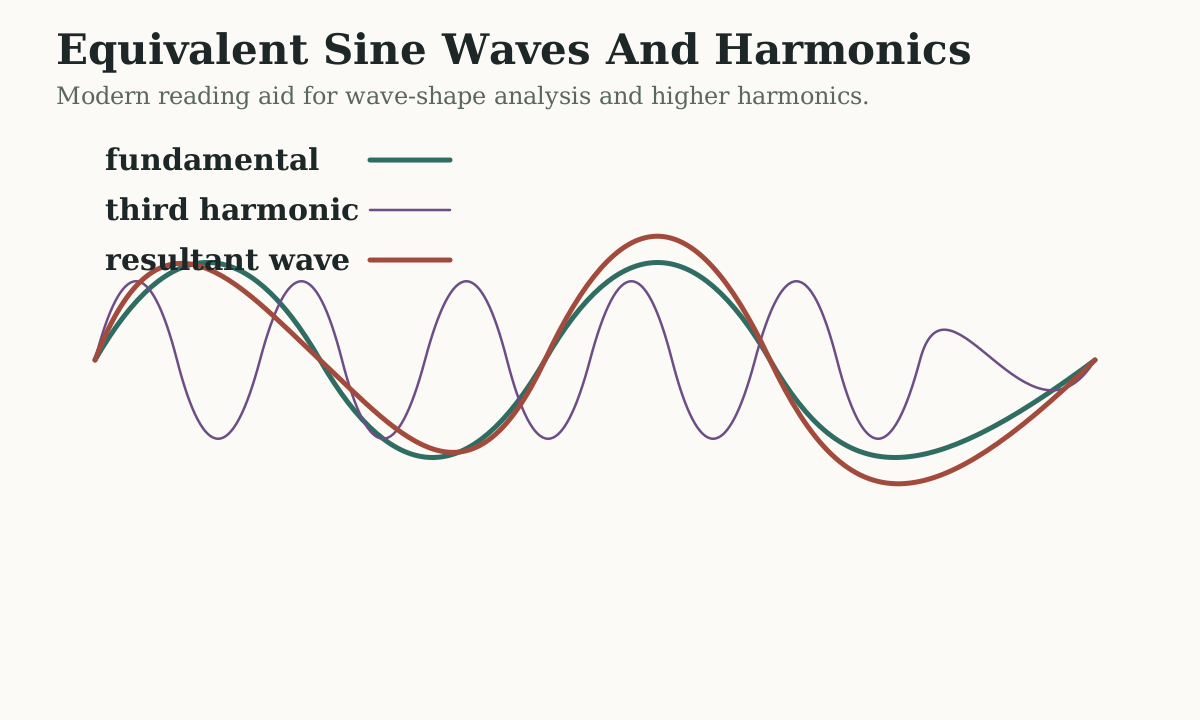
Modern reading aid for wave-shape analysis and higher harmonics.
harmonics, wave-shape, fourier-analysis
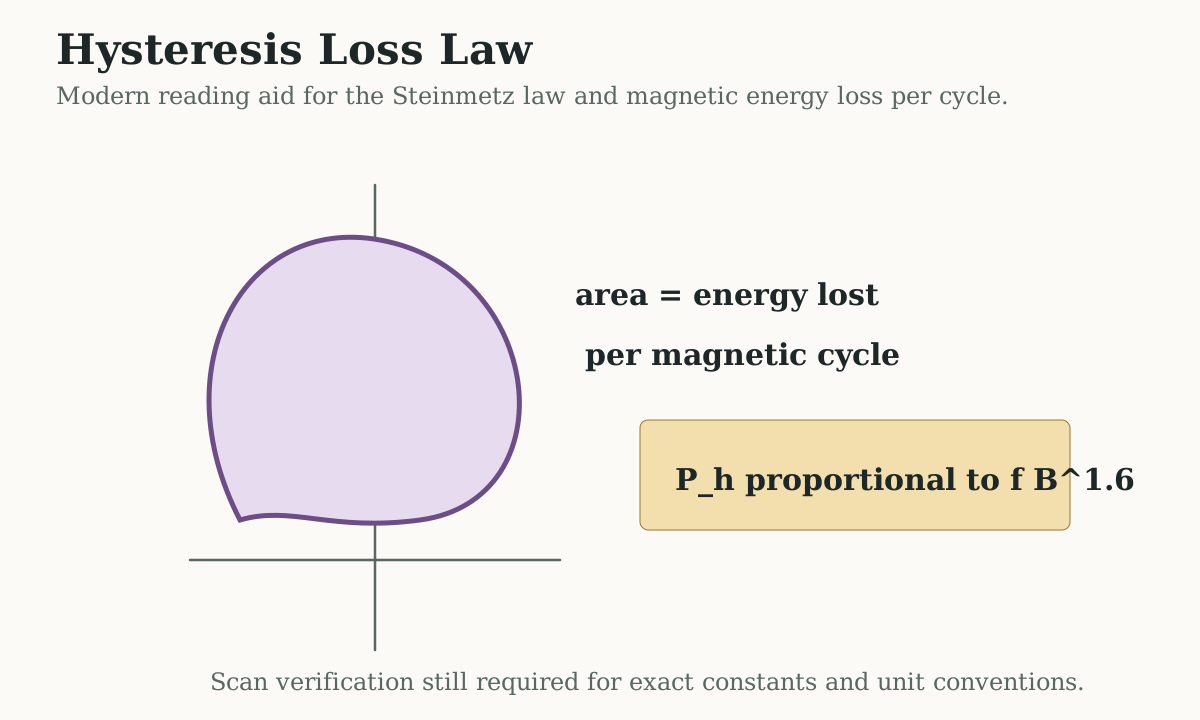
Modern reading aid for the Steinmetz law and magnetic energy loss per cycle.
hysteresis, magnetic-loss, effective-resistance
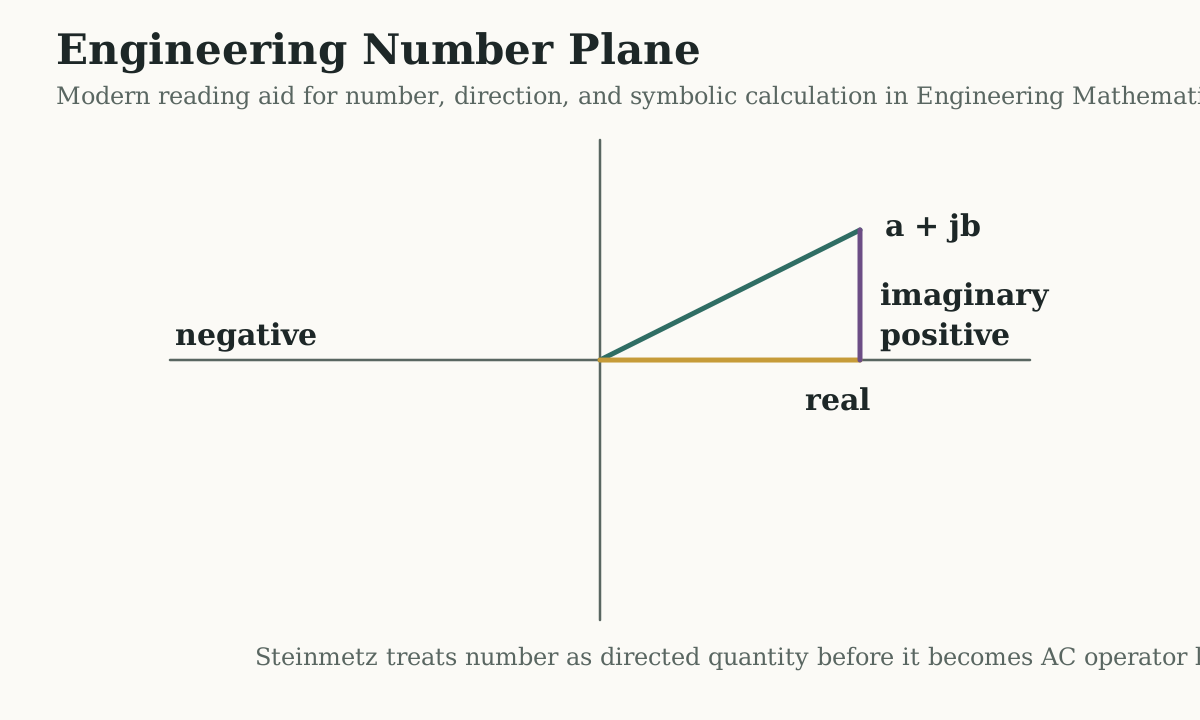
Modern reading aid for number, direction, and symbolic calculation in Engineering Mathematics.
complex-quantities, number, symbolic-method
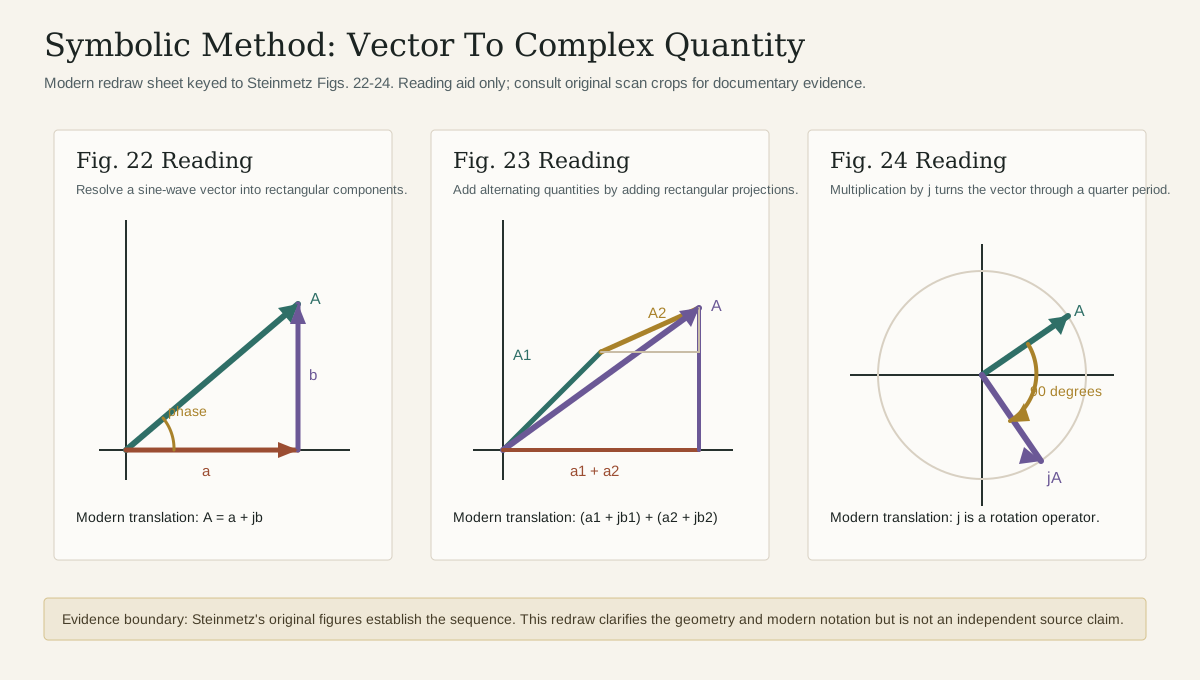
Modern redraw sheet for rectangular components, resultant addition, and quarter-period j rotation.
symbolic-method, complex-quantities, phasor, operator-j
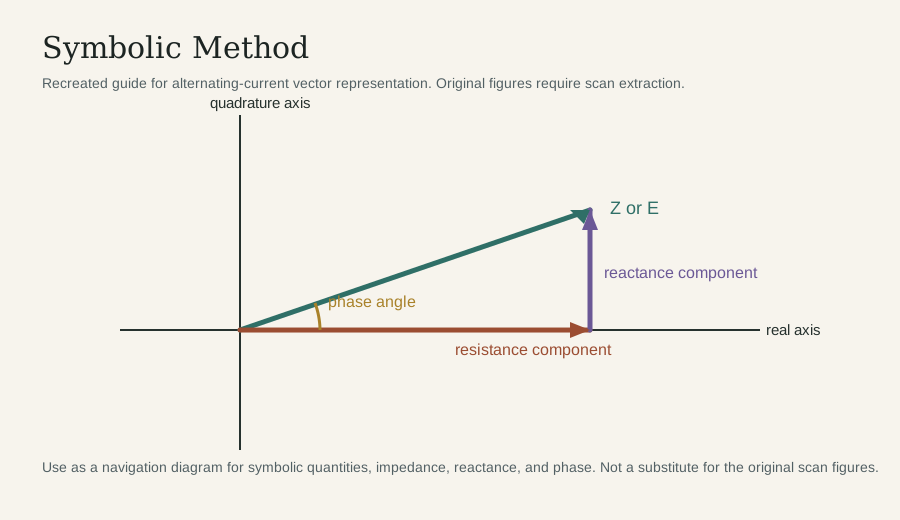
Modern reading aid for vector and complex-number representation of alternating quantities.
symbolic-method, complex-quantities, phase, phasor
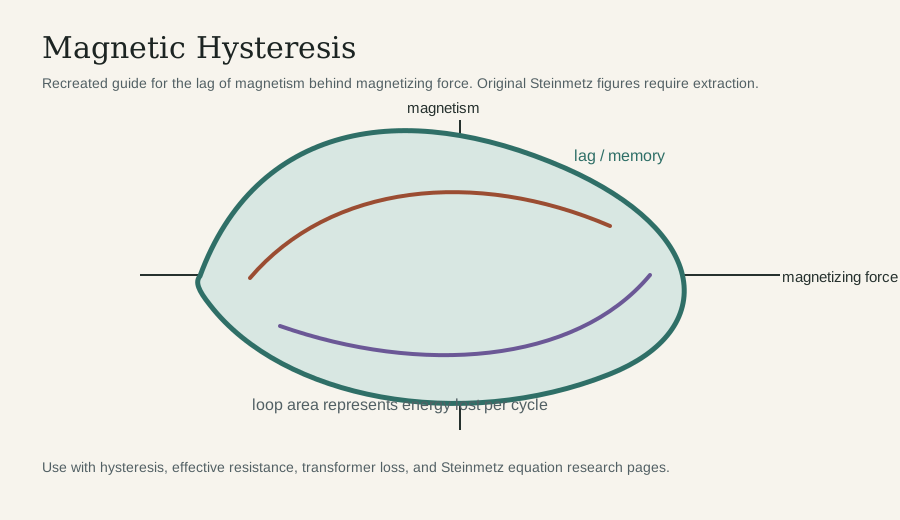
Modern guide for magnetic lag, loop area, and energy loss per cycle.
hysteresis, magnetism, magnetic-loss, effective-resistance
Candidate Figure References
Section titled “Candidate Figure References”| Candidate | Caption lead | Section | Routes |
|---|---|---|---|
engineering-mathematics-fig-005Fig. 5 | ■e- FiG. 5. tance in the direction rotated 90 deg. from +2, or in quadrature | Chapter 1: The General Number | source workbench |
engineering-mathematics-fig-006Fig. 6 | +3 Fig. 6. For instance, in problems dealing with plain geometry, as in | Chapter 1: The General Number | source workbench |
engineering-mathematics-fig-010Fig. 10 | There are therefore n different valuesof av^ + 1, which lie equidistant on a circle with radius 1, as shown for n = 9 in Fig. 10. 14. In the operation of addition, a + 6 = c, the problem is, a and 6 being given, to fi… | Chapter 1: The General Number | source workbench |
engineering-mathematics-fig-020Fig. 20 | d) — I — 1 0 (D — I — I — I — I — I — I — I — © — I — • — I O A B C Fig. 20. horses, multiplication has no physical meaning. If they repre- sent feet, the product of multiphcation has a physical meaning, | Chapter 1: The General Number | source workbench |
engineering-mathematics-fig-046Fig. 46 | of the exactness of the results resulting from the limited num- FiG. 46. ber of numerical values of i, on which the calculation is based. | Chapter 3: Trigonometric Series | source workbench |
engineering-mathematics-fig-047Fig. 47 | able to supply the charging current of the line, due to the Fig. 47. wave shape distortion, more than two generators are required. | Chapter 3: Trigonometric Series | source workbench |
engineering-mathematics-fig-048Fig. 48 | purposes, as short-distance distribution. Fig. 48. In Figs. 47 and 48 are plotted the voltage wave and the current wave, from equations (9) and (14) repsectively, and | Chapter 3: Trigonometric Series | source workbench |
engineering-mathematics-fig-049Fig. 49 | As seen from Fig. 49, the fundamental wave has practically Fig. 49. vanished, and the voltage wave is the seventh harmonic, modi- | Chapter 3: Trigonometric Series | source workbench |
engineering-mathematics-fig-057Fig. 57 | ?ro (62) Fig. 57. Substituting (61) into (62) gives, | Chapter 3: Trigonometric Series | source workbench |