Theory and Calculation of Alternating Current Phenomena Visual Map
Visual Map
Section titled “Visual Map”Review layer: candidate figure references are OCR/PDF-text leads. Promoted crops are documentary scan crops that still need second-pass bibliographic and crop-coordinate review. Modern guide diagrams are explanatory reconstructions, not historical figure evidence.
Promoted original crops.
Candidate figure references.
Modern guide diagrams keyed here.
Formula candidates in the same source.
Promoted Original Crops
Section titled “Promoted Original Crops”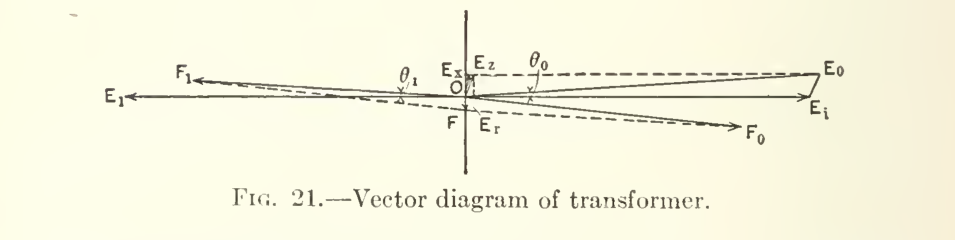
Theory and Calculation of Alternating Current Phenomena, Chapter V, printed page 30, PDF page 58; Fig. 21
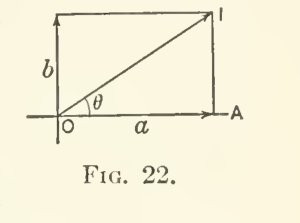
Theory and Calculation of Alternating Current Phenomena, Chapter V, printed page 31, PDF page 59; Fig. 22
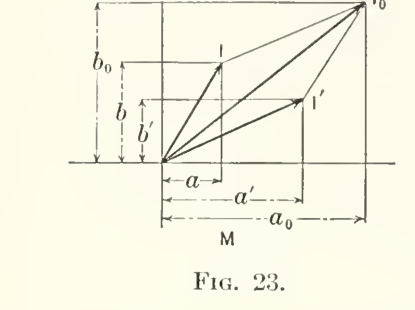
Theory and Calculation of Alternating Current Phenomena, Chapter V, printed page 32, PDF page 60; Fig. 23
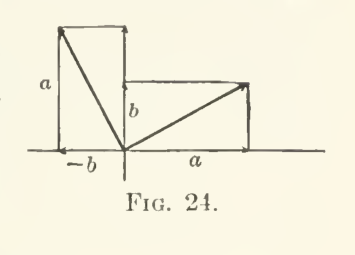
Theory and Calculation of Alternating Current Phenomena, Chapter V, printed page 33, PDF page 61; Fig. 24
Modern Guide Diagrams Keyed To This Source
Section titled “Modern Guide Diagrams Keyed To This Source”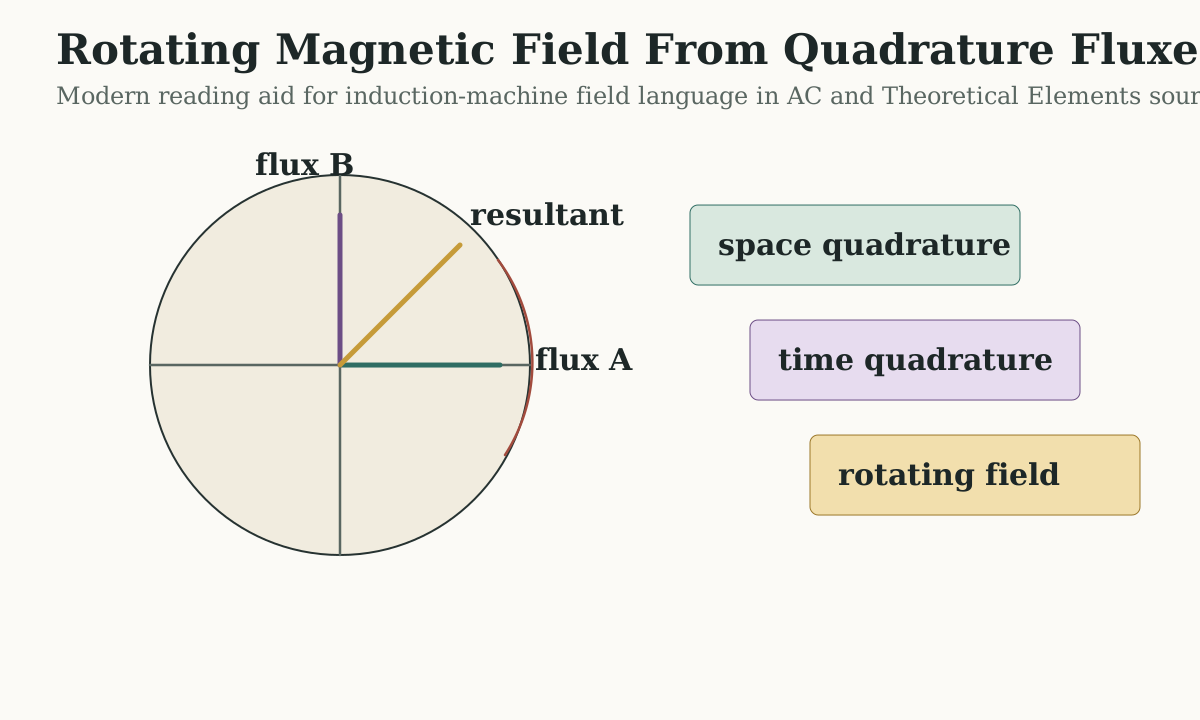
Modern reading aid for induction-machine field language in AC and Theoretical Elements sources.
symbolic-method, magnetism, phase, induction-motor
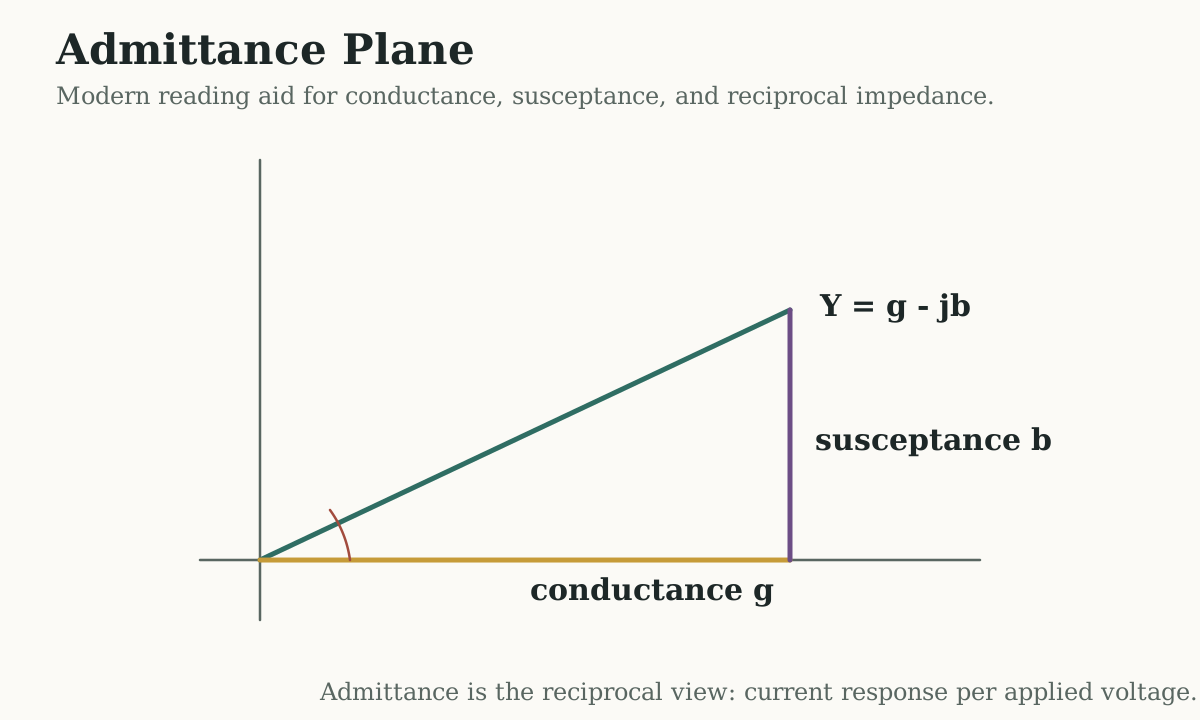
Modern reading aid for conductance, susceptance, and reciprocal impedance.
admittance, conductance, susceptance, symbolic-method
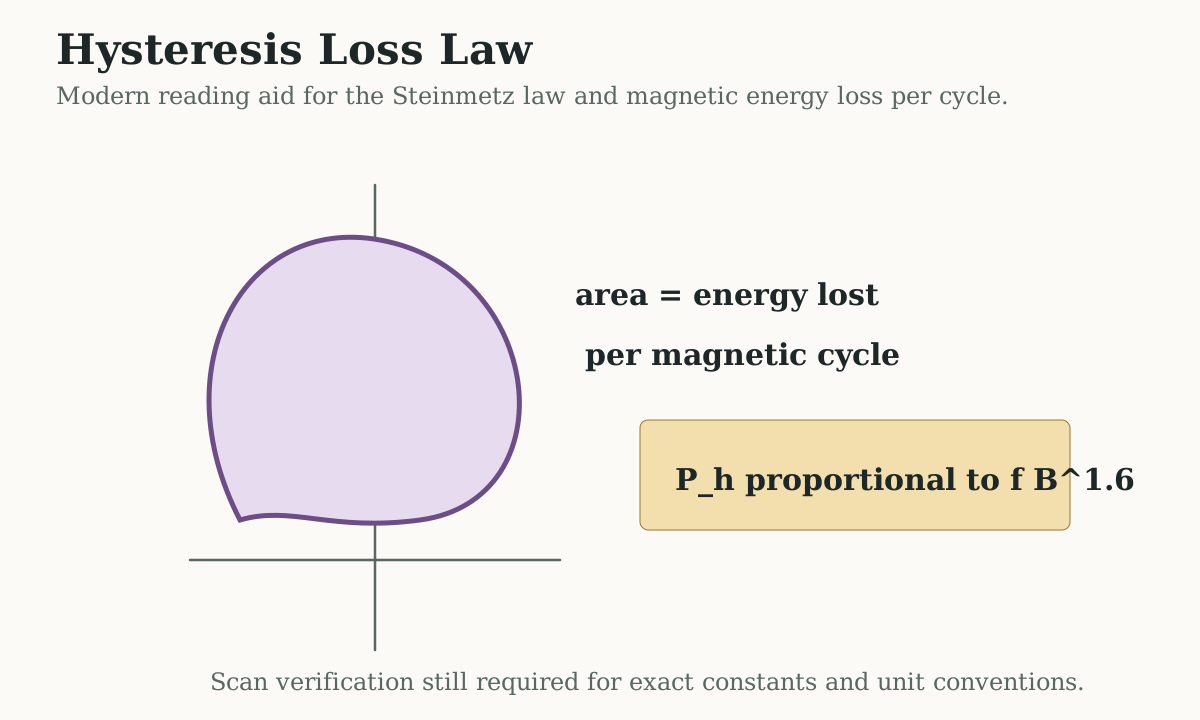
Modern reading aid for the Steinmetz law and magnetic energy loss per cycle.
hysteresis, magnetic-loss, effective-resistance
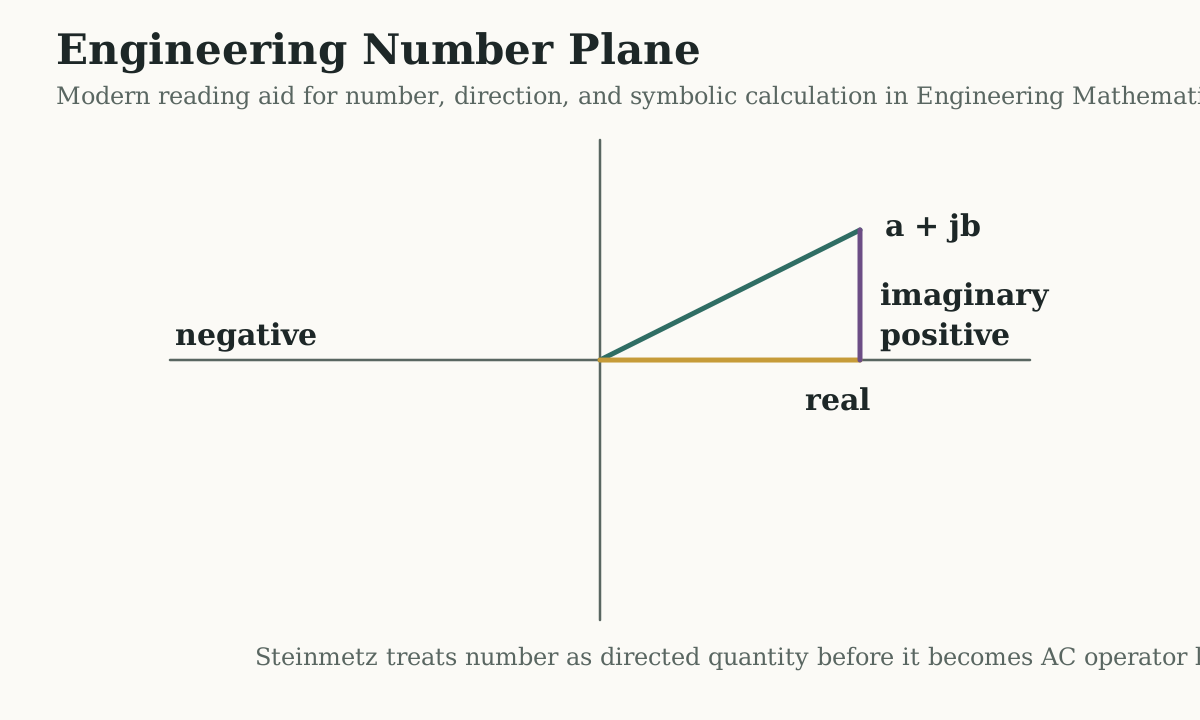
Modern reading aid for number, direction, and symbolic calculation in Engineering Mathematics.
complex-quantities, number, symbolic-method
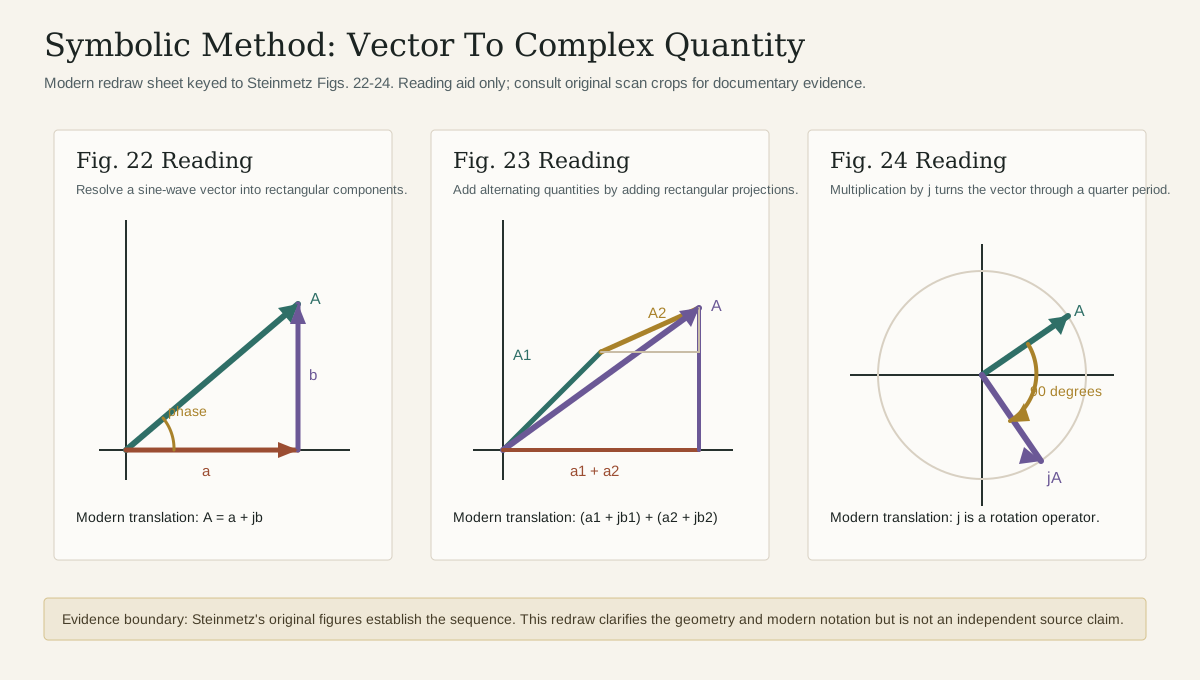
Modern redraw sheet for rectangular components, resultant addition, and quarter-period j rotation.
symbolic-method, complex-quantities, phasor, operator-j
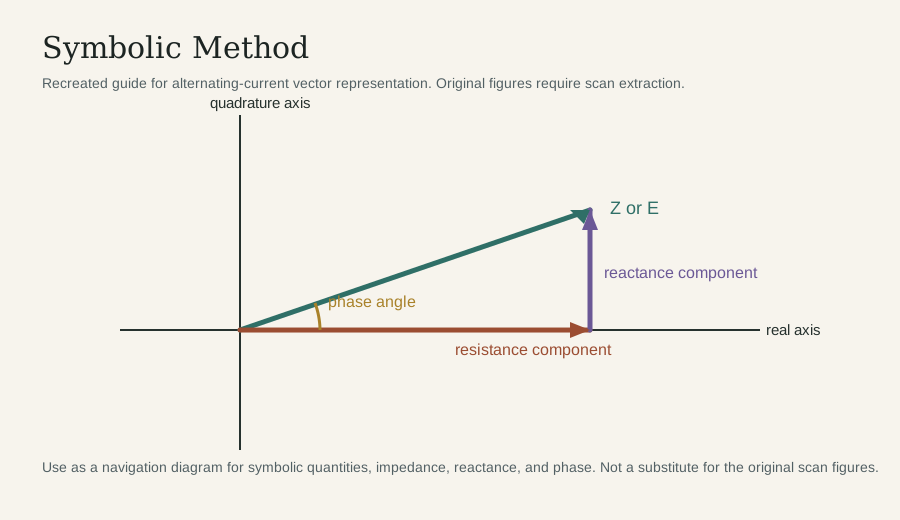
Modern reading aid for vector and complex-number representation of alternating quantities.
symbolic-method, complex-quantities, phase, phasor
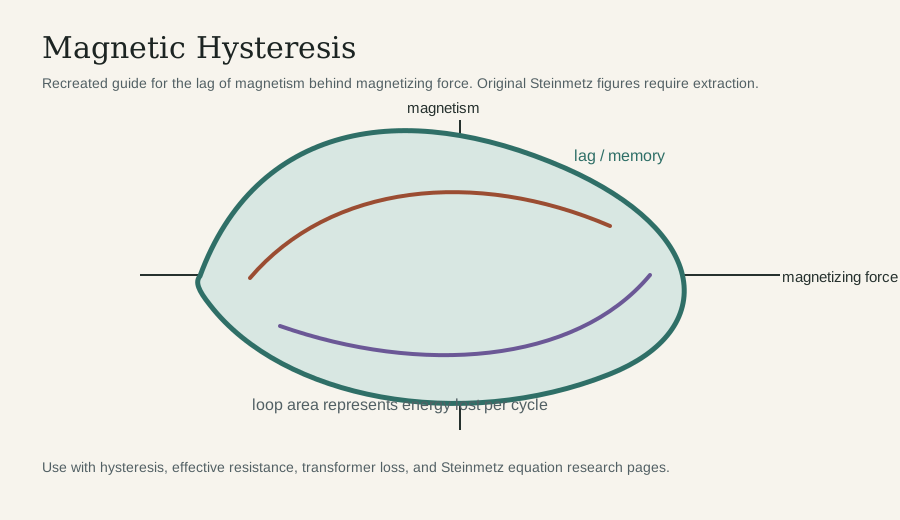
Modern guide for magnetic lag, loop area, and energy loss per cycle.
hysteresis, magnetism, magnetic-loss, effective-resistance
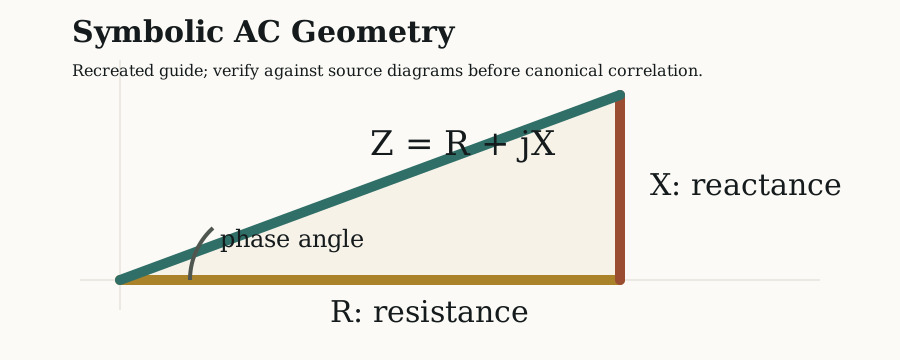
Modern guide for resistance, reactance, impedance, phase angle, and symbolic quantities.
impedance, reactance, power-factor, symbolic-method
Candidate Figure References
Section titled “Candidate Figure References”| Candidate | Caption lead | Section | Routes |
|---|---|---|---|
theory-calculation-alternating-current-phenomena-fig-006Fig. 6 | maximum variation of the sine is equal to the variation of the Fig. 6. Fig. 7. | Chapter 2: Instantaneous Values And Integral Values | source workbench |
theory-calculation-alternating-current-phenomena-fig-007Fig. 7 | Fig. 6. Fig. 7. corresponding arc, and consequently the maximum variation of | Chapter 2: Instantaneous Values And Integral Values | source workbench |
theory-calculation-alternating-current-phenomena-fig-010Fig. 10 | 21 Fig. 10. phase angle — /3’ = — (a’ — ??]) = 10 A, and the equations of | Chapter 4: Vector Representation | source workbench |
theory-calculation-alternating-current-phenomena-fig-016Fig. 16 | ^E, Fig. 16. Fig. 17. | Chapter 4: Vector Representation | source workbench |
theory-calculation-alternating-current-phenomena-fig-017Fig. 17 | Fig. 16. Fig. 17. the current by the angle, Q. The voltage consumed by the resist- | Chapter 4: Vector Representation | source workbench |
theory-calculation-alternating-current-phenomena-fig-019Fig. 19 | Ei-< «; Fig. 19. The primary impressed e.m.f., Ep, must thus consist of the three components OEi, OEr, and OE^, and is, therefore, their | Chapter 4: Vector Representation | source workbench |
theory-calculation-alternating-current-phenomena-fig-024Fig. 24 | 33 Fig. 24. polar coordinates by a vector of opposite direction, and denoted | Chapter 5: Symbolic Method | source workbench |
theory-calculation-alternating-current-phenomena-fig-025Fig. 25 | ,,U— — L Fig. 25. Fig. 26. | Chapter 6: Topographic Method | source workbench |
theory-calculation-alternating-current-phenomena-fig-026Fig. 26 | Fig. 25. Fig. 26. in the opposite direction, from terminal B to terminal A in op- | Chapter 6: Topographic Method | source workbench |
theory-calculation-alternating-current-phenomena-fig-029Fig. 29 | NON-INDUCTIVE LOAD Fig. 29. Fig. 30. | Chapter 6: Topographic Method | source workbench |
theory-calculation-alternating-current-phenomena-fig-030Fig. 30 | Fig. 29. Fig. 30. these currents are represented in Fig. 29 by the vectors 01 1 = | Chapter 6: Topographic Method | source workbench |
theory-calculation-alternating-current-phenomena-fig-031Fig. 31 | CAPACIir AND RESISTANCE Fig. 31. Fig. 32. | Chapter 6: Topographic Method | source workbench |
theory-calculation-alternating-current-phenomena-fig-032Fig. 32 | Fig. 31. Fig. 32. triangle, Ei^E^^Ez^, the voltages at the receiver’s circuit, Ei, E2, | Chapter 6: Topographic Method | source workbench |
theory-calculation-alternating-current-phenomena-fig-033Fig. 33 | RESISTANCE AND LEAKAGE Fig. 33. 16 I TRANSMISSION | Chapter 6: Topographic Method | source workbench |
theory-calculation-alternating-current-phenomena-fig-034Fig. 34 | 90” LAG Fig. 34. and generator currents, /i”, 72°, I^, over the topographical char- | Chapter 6: Topographic Method | source workbench |
theory-calculation-alternating-current-phenomena-fig-035Fig. 35 | RESISTANCE AND LEAKAGE Fig. 35. their difference of phase are plotted in Fig. 35 in rectangular | Chapter 6: Topographic Method | source workbench |
theory-calculation-alternating-current-phenomena-fig-037Fig. 37 | represented by an increase of angle B in counter-clockwise rota- FiG. 37 tion. That is, the positive direction, or increase of time, is | Chapter 7: Polar Coordinates And Polar Diagrams | source workbench |
theory-calculation-alternating-current-phenomena-fig-041Fig. 41 | ^i Fig. 41. Fig. 42. | Chapter 7: Polar Coordinates And Polar Diagrams | source workbench |
theory-calculation-alternating-current-phenomena-fig-042Fig. 42 | Fig. 41. Fig. 42. then appear in the vector representation of the time diagram or | Chapter 7: Polar Coordinates And Polar Diagrams | source workbench |
theory-calculation-alternating-current-phenomena-fig-043Fig. 43 | E^-^ Fig. 43. Fig. 45. | Chapter 7: Polar Coordinates And Polar Diagrams | source workbench |
theory-calculation-alternating-current-phenomena-fig-045Fig. 45 | Fig. 43. Fig. 45. lagging behind the voltage: | Chapter 7: Polar Coordinates And Polar Diagrams | source workbench |
theory-calculation-alternating-current-phenomena-fig-046Fig. 46 | then means: Fig. 46. POLAR COORDINATES AND POLAR DIAGRAMS 51 | Chapter 7: Polar Coordinates And Polar Diagrams | source workbench |
theory-calculation-alternating-current-phenomena-fig-048Fig. 48 | ^ Fig. 48. R’ | Chapter 7: Polar Coordinates And Polar Diagrams | source workbench |
theory-calculation-alternating-current-phenomena-fig-049Fig. 49 | 7 1.8 Fig. 49. The sign in the complex expression of admittance is always opposite to that of impedance; this is obvious, since if the cur- | Chapter 8: Admittance, Conductance, Susceptance | source workbench |
theory-calculation-alternating-current-phenomena-fig-051Fig. 51 | Eo E Fig. 51. M | Chapter 9: Circuits Containing Resistance, Inductive Reactance, And Condensive Reactance | source workbench |
theory-calculation-alternating-current-phenomena-fig-052Fig. 52 | Eo Fig. 52. Fig. 53. | Chapter 9: Circuits Containing Resistance, Inductive Reactance, And Condensive Reactance | source workbench |
theory-calculation-alternating-current-phenomena-fig-053Fig. 53 | Fig. 52. Fig. 53. 2. Reactance in Series with a Circuit | Chapter 9: Circuits Containing Resistance, Inductive Reactance, And Condensive Reactance | source workbench |
theory-calculation-alternating-current-phenomena-fig-054Fig. 54 | ohms inductance-’— reactance-^condensance Fig. 54. E^, are shown for various conditions of a receiver circuit and | Chapter 9: Circuits Containing Resistance, Inductive Reactance, And Condensive Reactance | source workbench |
theory-calculation-alternating-current-phenomena-fig-055Fig. 55 | 0 Fig. 55. Fig. 56. | Chapter 9: Circuits Containing Resistance, Inductive Reactance, And Condensive Reactance | source workbench |
theory-calculation-alternating-current-phenomena-fig-056Fig. 56 | Fig. 55. Fig. 56. Fig. 57. | Chapter 9: Circuits Containing Resistance, Inductive Reactance, And Condensive Reactance | source workbench |
theory-calculation-alternating-current-phenomena-fig-057Fig. 57 | Fig. 56. Fig. 57. is, the current and e.m.f. in the supply circuit are in phase with | Chapter 9: Circuits Containing Resistance, Inductive Reactance, And Condensive Reactance | source workbench |
theory-calculation-alternating-current-phenomena-fig-058Fig. 58 | ^w=+90 80 70 60 50 40 30 20 10 0 10 20 30 40 50 60 70 80 90 degrees lag-«- phase difference in consumer circuit-*- lead Fig. 58. In Figs. 59 and 60, the same curves are plotted as in Fig. 58, but in Fig. 59 with the r… | Chapter 9: Circuits Containing Resistance, Inductive Reactance, And Condensive Reactance | source workbench |
theory-calculation-alternating-current-phenomena-fig-059Fig. 59 | +1 +.9 +.8 +.7 +.6 +.5 +.4 +.3 +.2 +.1 0 -.1 -.2 -.3 -.4 -.5 -.6 reactance of consumer circuit Fig. 59. -.7 -.8 -.9-10 | Chapter 9: Circuits Containing Resistance, Inductive Reactance, And Condensive Reactance | source workbench |
theory-calculation-alternating-current-phenomena-fig-060Fig. 60 | _ resistance of . consumer circuit Fig. 60. ,7 .6 .5 .4 .3 .2 .1 .0 | Chapter 9: Circuits Containing Resistance, Inductive Reactance, And Condensive Reactance | source workbench |
theory-calculation-alternating-current-phenomena-fig-061Fig. 61 | 1. .9 .8 .7 .6 .5 ,4 .3 .2 .1 0 -.1 -.2 -.3 -.1 -.5 -.6 -.7 -.8 -.9-L X — ^ Fig. 61. E | Chapter 9: Circuits Containing Resistance, Inductive Reactance, And Condensive Reactance | source workbench |
theory-calculation-alternating-current-phenomena-fig-062Fig. 62 | tro Fig. 62. Fig. 63. | Chapter 9: Circuits Containing Resistance, Inductive Reactance, And Condensive Reactance | source workbench |
theory-calculation-alternating-current-phenomena-fig-063Fig. 63 | Fig. 62. Fig. 63. 72 | Chapter 9: Circuits Containing Resistance, Inductive Reactance, And Condensive Reactance | source workbench |
theory-calculation-alternating-current-phenomena-fig-065Fig. 65 | loss of power. Fig. 65. Then, if Eo = impressed e.m.f., the current in receiver circuit is | Chapter 9: Circuits Containing Resistance, Inductive Reactance, And Condensive Reactance | source workbench |
theory-calculation-alternating-current-phenomena-fig-067Fig. 67 | 1 Fig. 67. 5. Constant Potential — Constant-current Transformation | Chapter 9: Circuits Containing Resistance, Inductive Reactance, And Condensive Reactance | source workbench |
theory-calculation-alternating-current-phenomena-fig-068Fig. 68 | supply, and inversely. Fig. 68 The generation of alternating-current electric power almost always takes place at constant potential. For some purposes, | Chapter 9: Circuits Containing Resistance, Inductive Reactance, And Condensive Reactance | source workbench |
theory-calculation-alternating-current-phenomena-fig-072Fig. 72 | 0 Fig. 72. .03 ,03 M. .05 .00 .07 .OS | Chapter 10: Resistance And Reactance Of Transmission | source workbench |
theory-calculation-alternating-current-phenomena-fig-076Fig. 76 | » Fig. 76. 10 20 30 10 50 60 7.0 .80 90 100 | Chapter 10: Resistance And Reactance Of Transmission | source workbench |
theory-calculation-alternating-current-phenomena-fig-077Fig. 77 | AMPERES LOAD « l Fig. 77. and the leading quadrature component of current required to compensate for the line reactance x at maximum current, im, is | Chapter 11: Phase Control | source workbench |
theory-calculation-alternating-current-phenomena-fig-078Fig. 78 | ::} Fig. 78. 87. Equation (28) shows that there are two values of x: Xi and X2; and corresponding thereto two values of 60:^01 and 602, | Chapter 11: Phase Control | source workbench |
theory-calculation-alternating-current-phenomena-fig-081Fig. 81 | ^ Fig. 81. The general character of these current waves is, that the maxi- | Chapter 12: Effective Resistance And Reactance | source workbench |
theory-calculation-alternating-current-phenomena-fig-082Fig. 82 | then Fig. 82. — X^ | Chapter 12: Effective Resistance And Reactance | source workbench |
theory-calculation-alternating-current-phenomena-fig-086Fig. 86 | n = NUMBER OF TURNS Fig. 86. 350 | Chapter 12: Effective Resistance And Reactance | source workbench |
theory-calculation-alternating-current-phenomena-fig-087Fig. 87 | / = FREQUENCY Fig. 87. 400 | Chapter 12: Effective Resistance And Reactance | source workbench |
theory-calculation-alternating-current-phenomena-fig-088Fig. 88 | 200 250 Fig. 88. 300 | Chapter 12: Effective Resistance And Reactance | source workbench |
theory-calculation-alternating-current-phenomena-fig-089Fig. 89 | /=CYCLES Fig. 89. 300 | Chapter 12: Effective Resistance And Reactance | source workbench |
theory-calculation-alternating-current-phenomena-fig-090Fig. 90 | n=NUMBER OF TURNS Fig. 90. 350 | Chapter 12: Effective Resistance And Reactance | source workbench |
theory-calculation-alternating-current-phenomena-fig-092Fig. 92 | magnetic flux inclosed by the zone is SuV. Fig. 92. Hence, the e.m.f. generated in this zone is | Chapter 13: Foucault Or Eddy Currents | source workbench |
theory-calculation-alternating-current-phenomena-fig-093Fig. 93 | 93. Fig. 93. 110. Demagnetizing, or screening effect of eddy currents. | Chapter 13: Foucault Or Eddy Currents | source workbench |
theory-calculation-alternating-current-phenomena-fig-094Fig. 94 | du Fig. 94. The current inclosed by this zone is /„ | Chapter 13: Foucault Or Eddy Currents | source workbench |
theory-calculation-alternating-current-phenomena-fig-096Fig. 96 | ^ m Fig. 96. )J | Chapter 14: Dielectric Losses | source workbench |
theory-calculation-alternating-current-phenomena-fig-097Fig. 97 | ’ m Fig. 97. throughout the field section, but the voltage gradient in the | Chapter 14: Dielectric Losses | source workbench |
theory-calculation-alternating-current-phenomena-fig-098Fig. 98 | do so. Fig. 98. Fig. 99. | Chapter 14: Dielectric Losses | source workbench |
theory-calculation-alternating-current-phenomena-fig-099Fig. 99 | Fig. 98. Fig. 99. h’5 | Chapter 14: Dielectric Losses | source workbench |
theory-calculation-alternating-current-phenomena-fig-100Fig. 100 | JTTTTTTTTTTTTTTTTTTTTTTT- Fig. 100. In this case the intensity as well as phase of the current, and consequently of the counter e.m.f. of inductive reactance and | Chapter 15: Distributed Capacity, Inductance, Resistance, And Leakage | source workbench |
theory-calculation-alternating-current-phenomena-fig-101Fig. 101 | iEo Fig. 101. Denoting in Fig. 101. | Chapter 15: Distributed Capacity, Inductance, Resistance, And Leakage | source workbench |