Theoretical Elements of Electrical Engineering Visual Map
Visual Map
Section titled “Visual Map”Review layer: candidate figure references are OCR/PDF-text leads. Promoted crops are documentary scan crops that still need second-pass bibliographic and crop-coordinate review. Modern guide diagrams are explanatory reconstructions, not historical figure evidence.
Promoted original crops.
Candidate figure references.
Modern guide diagrams keyed here.
Formula candidates in the same source.
Promoted Original Crops
Section titled “Promoted Original Crops”No promoted original crops are attached to this source yet. Use the figure candidates below as crop targets.
Modern Guide Diagrams Keyed To This Source
Section titled “Modern Guide Diagrams Keyed To This Source”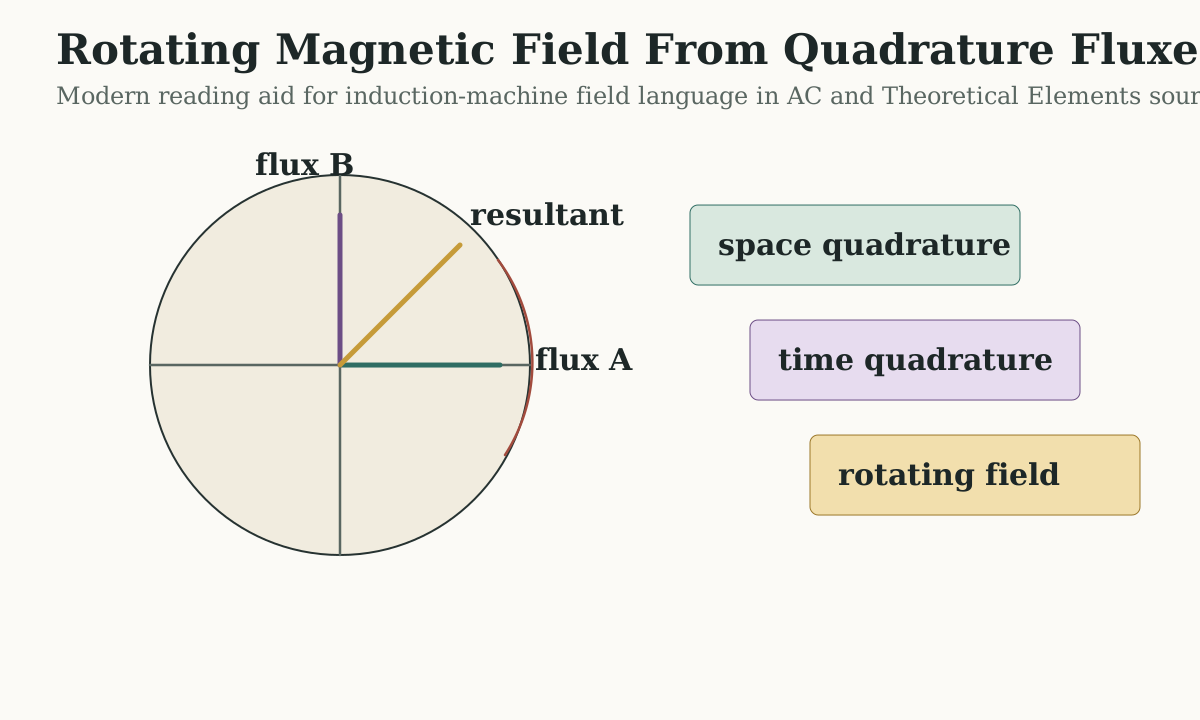
Modern reading aid for induction-machine field language in AC and Theoretical Elements sources.
symbolic-method, magnetism, phase, induction-motor
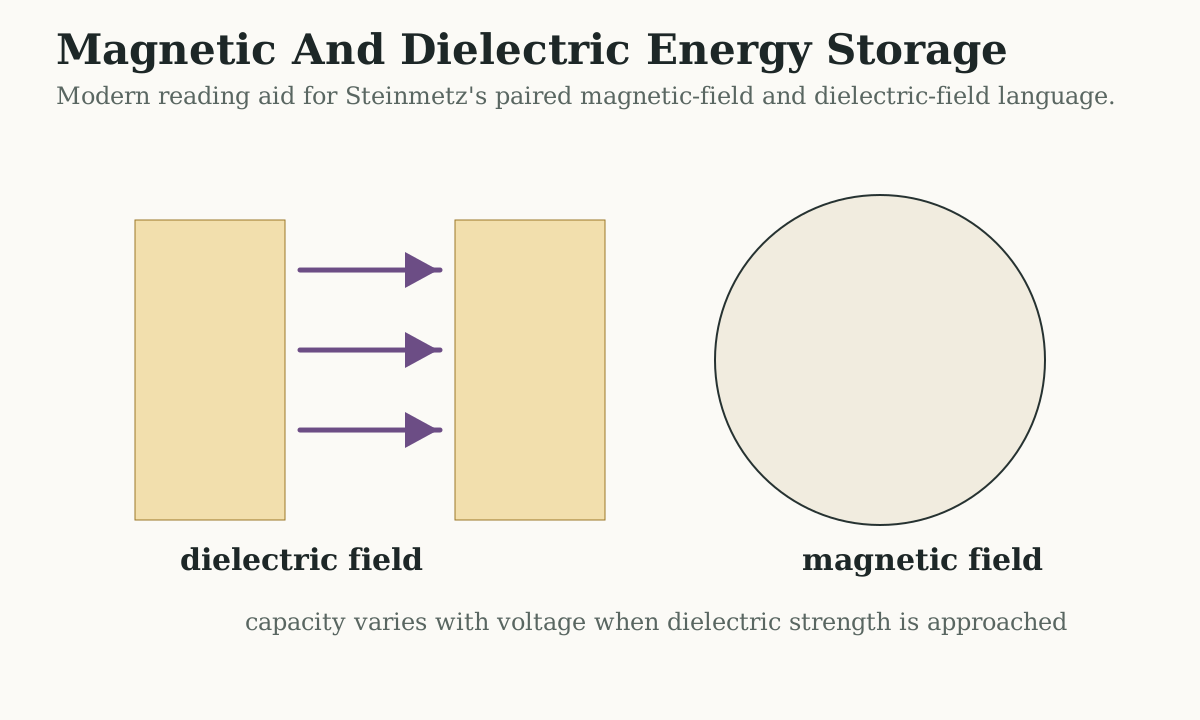
Modern reading aid for Steinmetz’s paired magnetic-field and dielectric-field language.
dielectric-field, magnetic-field, energy-storage
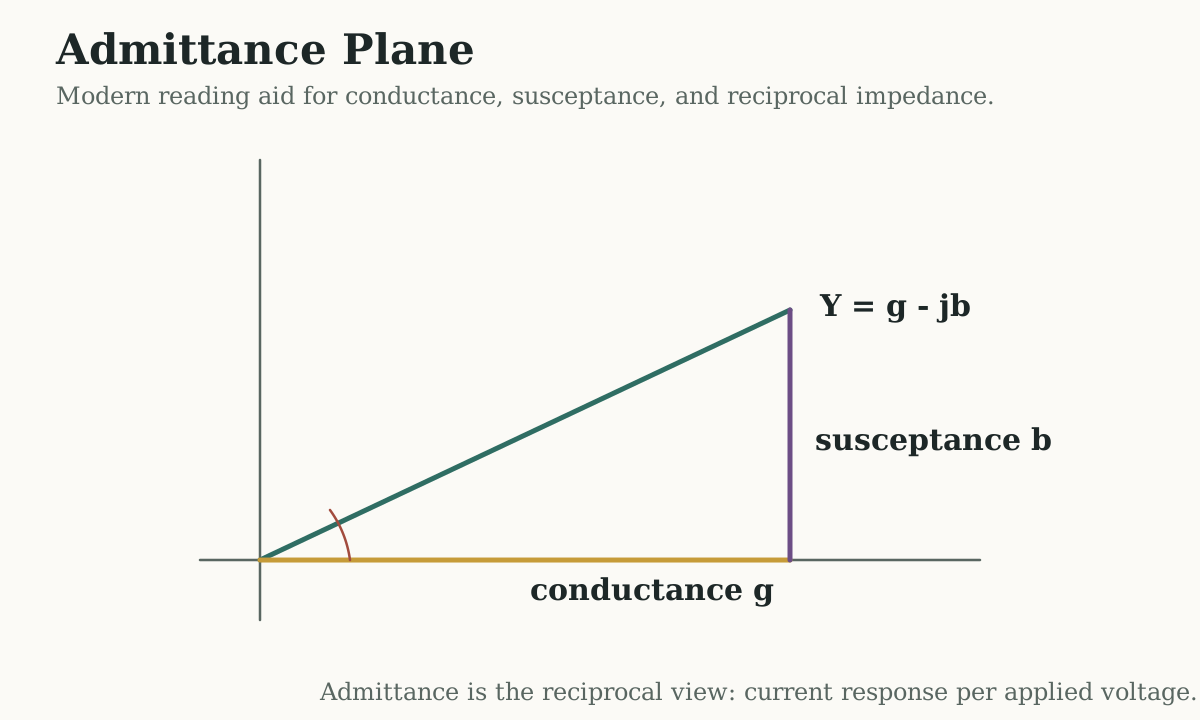
Modern reading aid for conductance, susceptance, and reciprocal impedance.
admittance, conductance, susceptance, symbolic-method
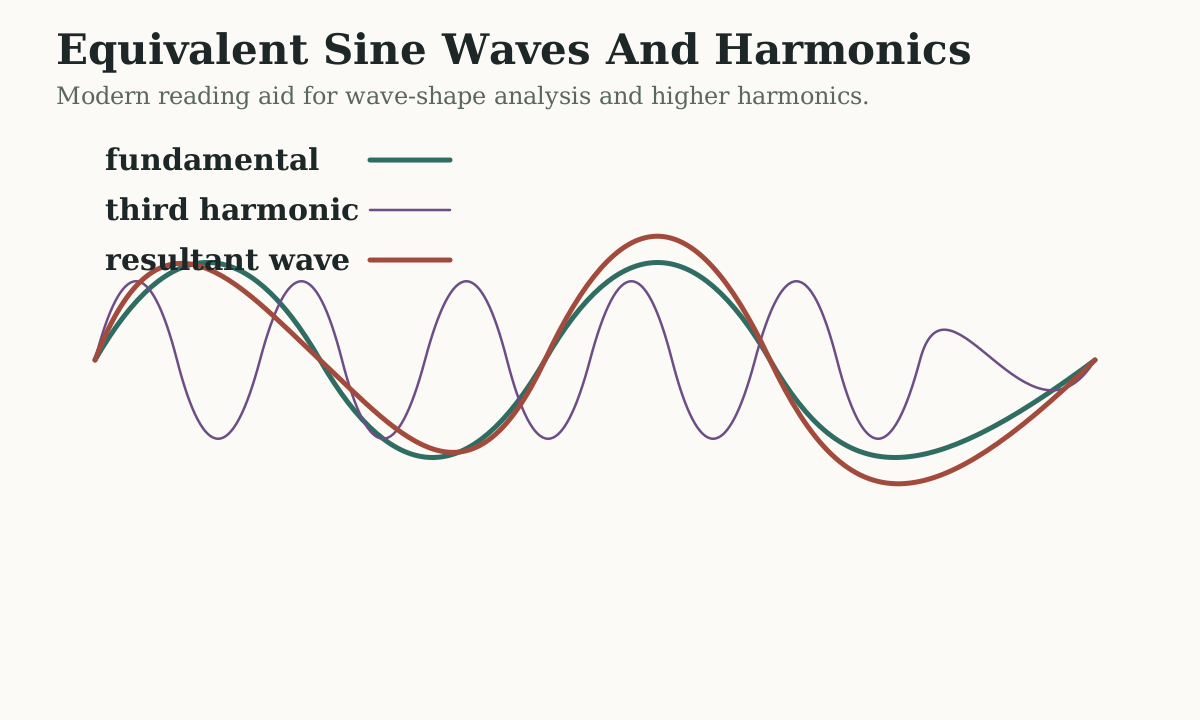
Modern reading aid for wave-shape analysis and higher harmonics.
harmonics, wave-shape, fourier-analysis
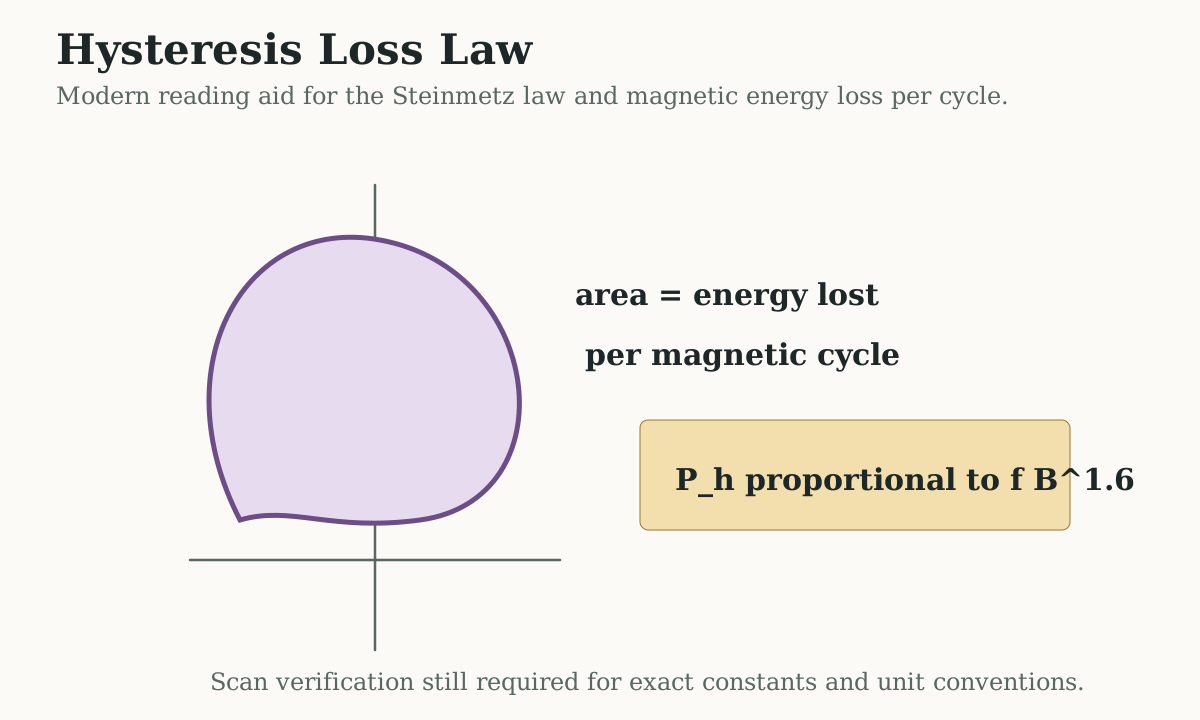
Modern reading aid for the Steinmetz law and magnetic energy loss per cycle.
hysteresis, magnetic-loss, effective-resistance
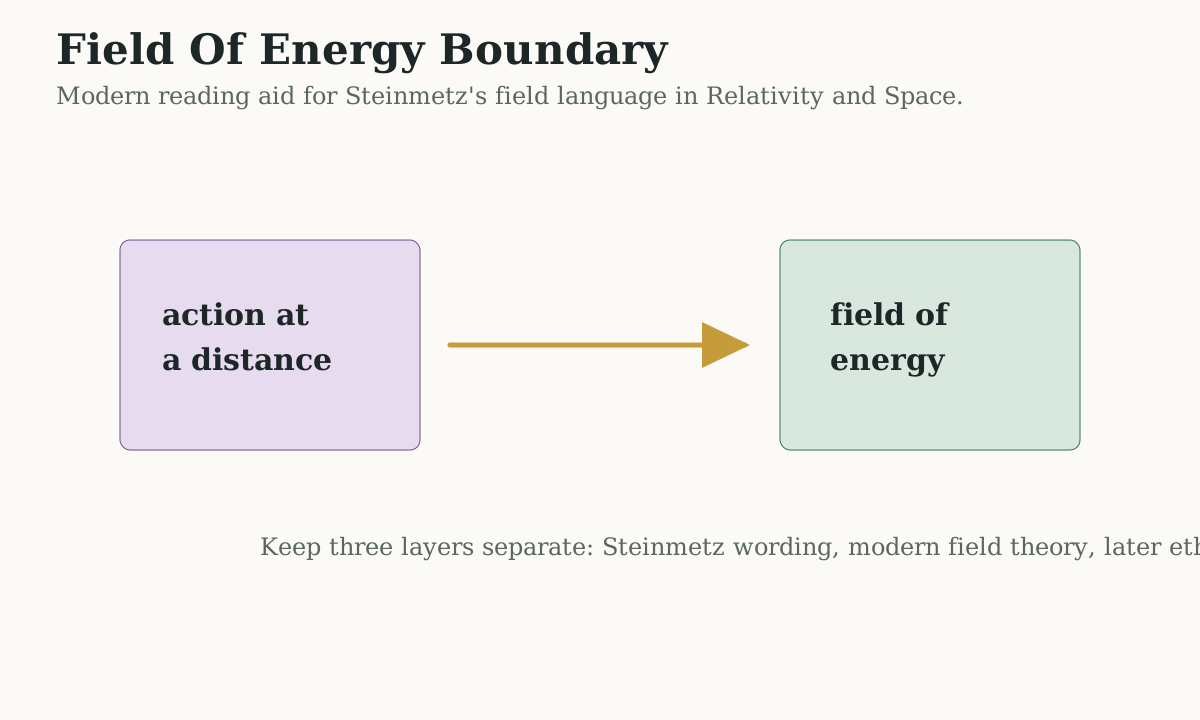
Modern reading aid for Steinmetz’s field language in Relativity and Space.
field-language, ether, relativity, energy-field
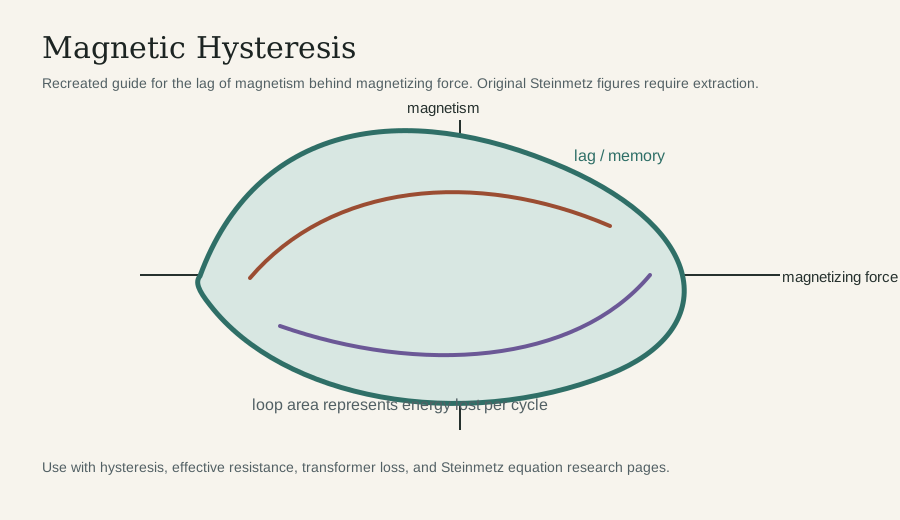
Modern guide for magnetic lag, loop area, and energy loss per cycle.
hysteresis, magnetism, magnetic-loss, effective-resistance
Candidate Figure References
Section titled “Candidate Figure References”| Candidate | Caption lead | Section | Routes |
|---|---|---|---|
theoretical-elements-electrical-engineering-fig-011Fig. 11 | e\ = — r/0 sin 0, opposite in phase to the current, shown as e\ in dotted line in Fig. 11. The counter e.m.f. of resistance and the e.m.f. consumed by resistance have the same relation to each other as the counter | Theory Section 7: Inductance in Alternating-current Circuits | source workbench |
theoretical-elements-electrical-engineering-fig-016Fig. 16 | of the current by angle EOI = 0 would come into the position OE, Fig. 16. This vector diagram then shows graphically, by the projections of the vectors on the horizontal, the instantaneous values of the | Theory Section 9: Vector Diagrams | source workbench |
theoretical-elements-electrical-engineering-fig-031Fig. 31 | Taking i from Fig. 31 and substituting, gives (a) the values of e0 for e = 2000, which are recorded in the table, and plotted in Fig. 31. JTPUT | Theory Section 12: Impedance of Transmission Lines | source workbench |
theoretical-elements-electrical-engineering-fig-045Fig. 45 | and dielectric fields of the space surrounding two conductors which are; carrying energy. FIG. 45. FIELDS OF FORCE | Theory Section 19: Fields of Force | source workbench |
theoretical-elements-electrical-engineering-fig-110Fig. 110 | 1231567 FIG. 110. 9 10 11 12 13 14 .15 16 17 18 19 20 21 | Apparatus Subsection 70: Direct-current Commutating Machines: C. Commutating Machines | source workbench |
theoretical-elements-electrical-engineering-fig-121Fig. 121 | 10 60 FIG. 121 100 120 _110 160 ISO | Apparatus Subsection 77: Direct-current Commutating Machines: C. Commutating Machines | source workbench |
theoretical-elements-electrical-engineering-fig-127Fig. 127 | alternating current in the armature section between a\ and a2, will reach a maximum when this section is midway between the brushes BI and Bz, as shown in Fig. 127. The direct current in every armature coil reverses a… | Apparatus Section 4: Synchronous Converters: Armature Current and Heating | source workbench |
theoretical-elements-electrical-engineering-fig-154Fig. 154 | I. Low core-loss type, Fig. 154 II. Low t*r loss type, Fig. 155 | Apparatus Section 1: Alternating-current Transformer: Low Core-loss Type, | source workbench |
theoretical-elements-electrical-engineering-fig-155Fig. 155 | Fig. 154 II. Low t*r loss type, Fig. 155 Exciting current | Apparatus Section 2: Alternating-current Transformer: Low T*r Loss Type, | source workbench |
theoretical-elements-electrical-engineering-fig-161Fig. 161 | the coils, it follows that in Fig. 162 the leakage flux interlinked with each turn of each winding, and thus the reactance of the transformer, is materially less than one-quarter of what it is in Fig. 161. The regulat… | Apparatus Section 4: Alternating-current Transformer: Regulation | source workbench |