Radiation, Light and Illumination
Radiation, Light and Illumination
Use the inline reader for page-level scan checks before treating OCR quotations as canonical.
sources/radiation-light-and-illumination/raw/radiation-light-and-illumination-1909-ia-scan.pdf Open inline scan reader
Read This Source
Section titled “Read This Source”Overview
Section titled “Overview”Radiation, Light and Illumination is a sequence of engineering lectures delivered at Union College. It treats radiation, light, electric waves, photometry, arc lamps, illumination, and visual physiology as one engineering field.
This makes it a strong first source for the archive: it contains explicit radiation and ether language, a frequency/wavelength scale connecting electric waves and light, and later chapters that force a careful distinction between physical power and human perception.
Deep Reading Strategy
Section titled “Deep Reading Strategy”The book should not be read as an isolated lighting manual. It begins with radiation as a general physical phenomenon, then narrows toward light, vision, photometry, lamps, and practical illumination. That arc is valuable because it shows Steinmetz refusing to collapse different layers of reality into one word: radiation is not automatically heat, light is not automatically illumination, physical energy is not automatically human visual effect, and measurement is not automatically experience.
For this archive, that means each lecture needs two kinds of decoding. The first is physical and mathematical: waves, frequency, wavelength, emission, absorption, reflection, refraction, flux, intensity, and distribution. The second is conceptual and historical: how early electrical engineering organized radiation, light, high-frequency electrical phenomena, and practical lighting before later textbook language standardized the vocabulary.
Processed Artifacts
Section titled “Processed Artifacts”- Raw scan PDF in
sources/radiation-light-and-illumination/raw/ - Internet Archive OCR in
processed/radiation-light-and-illumination/cleaned_text/internet-archive-ocr.txt - Lecture splits in
processed/radiation-light-and-illumination/cleaned_text/lecture-XX.md chapters.json,equations.json,figures.json,concepts.json,glossary.json,quotes.json- Five original scan-derived crops in
diagrams/original/radiation-light-and-illumination/figures/
Lecture Map
Section titled “Lecture Map”- Nature and Different Forms of Radiation
- Relation of Bodies to Radiation
- Physiological Effects of Radiation
- Chemical and Physical Effects of Radiation
- Temperature Radiation
- Luminescence
- Flames as Illuminants
- Arc Lamps and Arc Lighting
- Measurement of Light and Radiation
- Distribution of Light
- Light Intensity and Illumination
- Illumination and Illuminating Engineering
- Physiological Problems of Illuminating Engineering
First Concepts To Promote
Section titled “First Concepts To Promote”Radiation
Promote first because it anchors the entire book and gives the archive its first example of Steinmetz separating an energy process from the effect produced after absorption.
Electric Waves
Promote first because the opening lecture connects ordinary AC fields, Hertzian waves, wireless waves, visible light, ultraviolet, and X-rays through frequency and wavelength.
Illumination
Promote first because the later lectures show how physical radiation becomes practical lighting only after geometry, source distribution, measurement, and visual response are considered.
Visual Reading Aids
Section titled “Visual Reading Aids”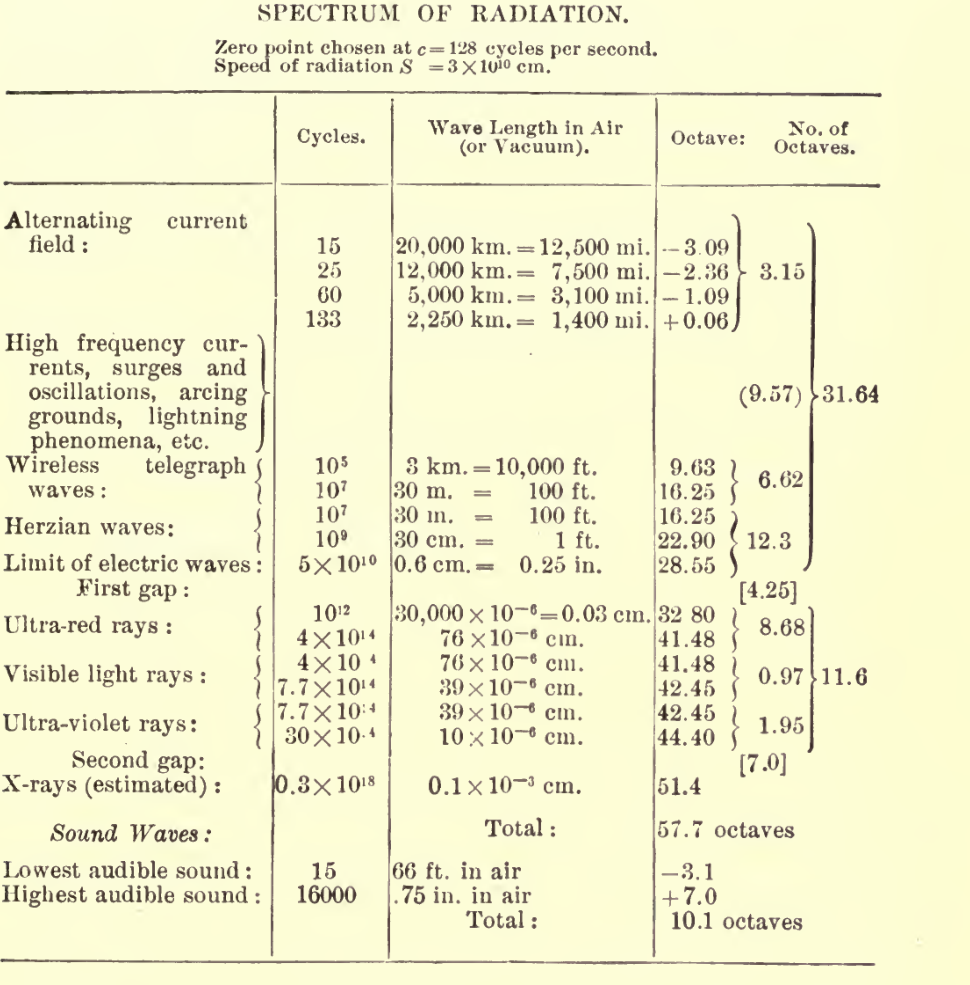
Scan crop from printed page 17, preserving Steinmetz’s tabular frequency and wavelength map.
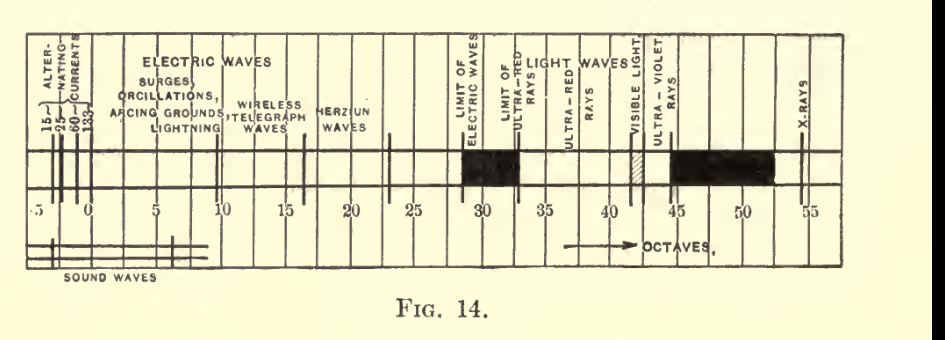
Scan crop from printed page 18, now linked to the diagram archive as the first original Steinmetz figure asset.
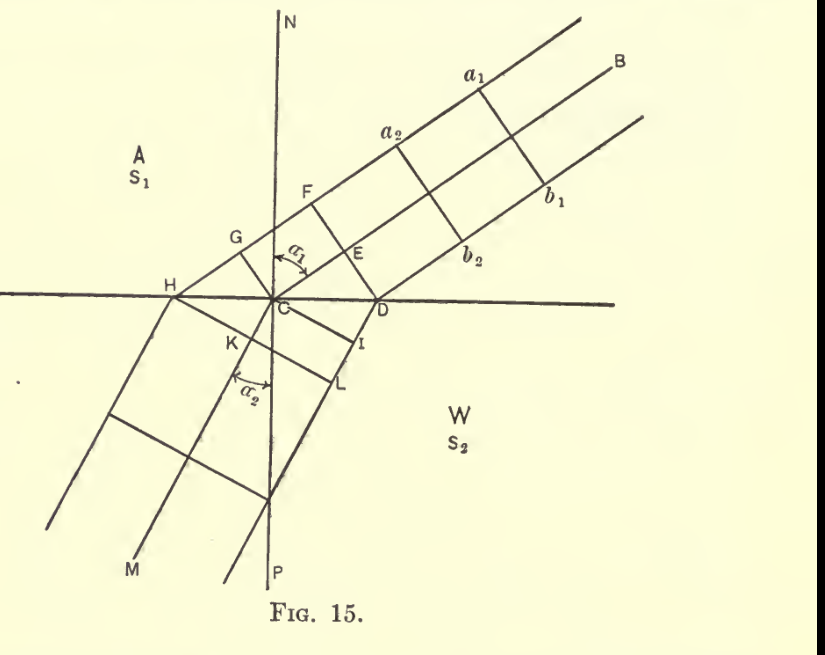
Scan crop from printed page 22, preserving the wavefront geometry behind the refraction derivation.
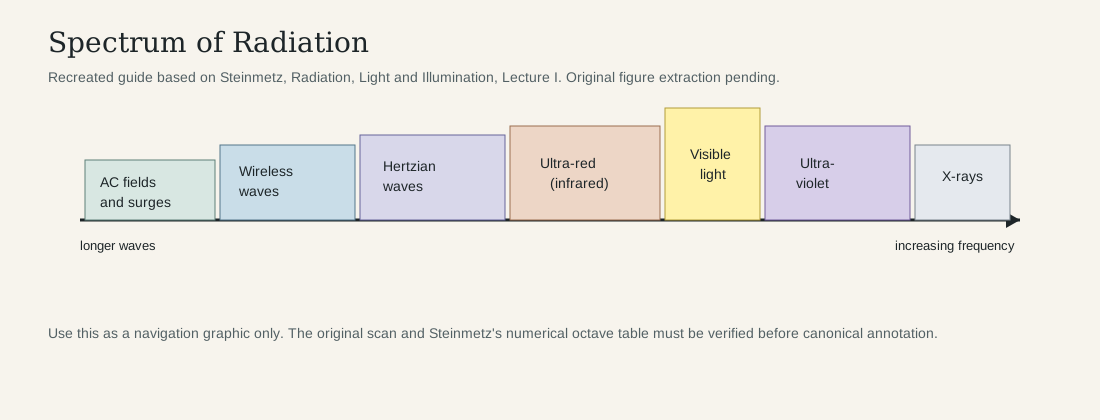
Lecture I reading aid for frequency, wavelength, and the continuity of electric waves and light.
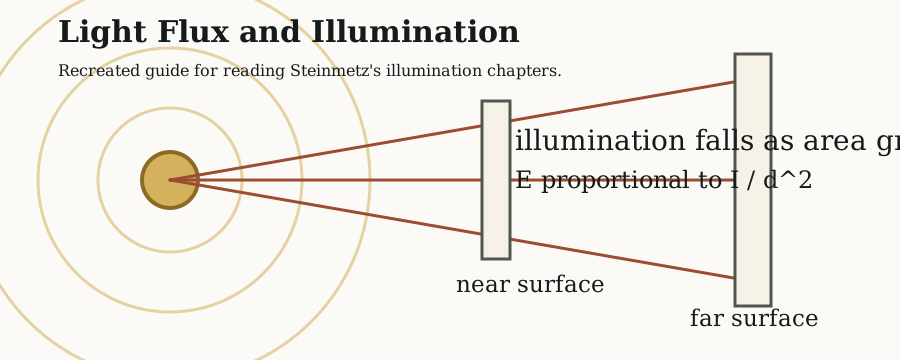
Later-lecture reading aid for flux, distance, receiving area, and useful illumination.
Quality Note
The current source text is OCR-derived. It is good enough for discovery, but equations, page references, Greek letters, figure captions, and exact quotations must be checked against the scan before canonical publication.